The AirMoveX Blog
Better Questions.
Better Fan Decisions.
Choosing a fan is rarely just about diameter. Find practical guides to selection, installation and maintenance—what to check, what to ask for, and where the limits are.
Explore Product ModelsRead Before You Specify
Industrial Fan Guides
Newest publications first. Need the essentials?
Start with the buyer resources.

Fans in Series or Parallel: Combine the Curves, Not the Catalog Numbers
For ideal identical fans, series curves add pressure at equal flow and parallel curves add flow at equal pressure. The installed operating point still comes from the system curve.
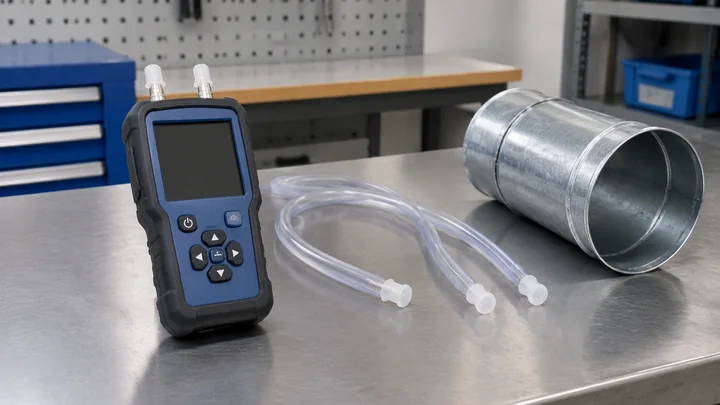
Fan Pressure Units: Convert Pa, in. w.g. and mm w.g. on One Basis
Convert fan pressure units consistently: 1 conventional in.w.g. is about 249.089 Pa and 1 conventional mm.w.g. is 9.80665 Pa. Keep the pressure definition unchanged.
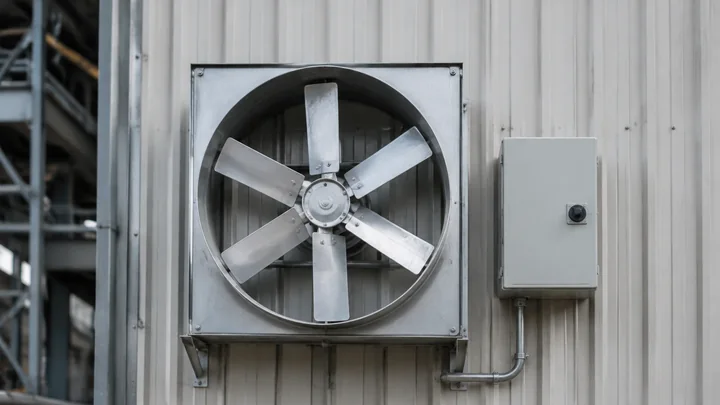
Stopped Exhaust Fans Can Windmill: A Stop Command Is Not Restraint
An exhaust fan can be driven by external airflow after its motor stops. Treat windmilling as an installation and service question, not a fault diagnosis from a photograph.

Fan FAT and SAT: Agree Which Question Each Test Must Answer
Separate factory acceptance from site acceptance: agree the configuration, test conditions, pass criteria and records for each stage before ordering.
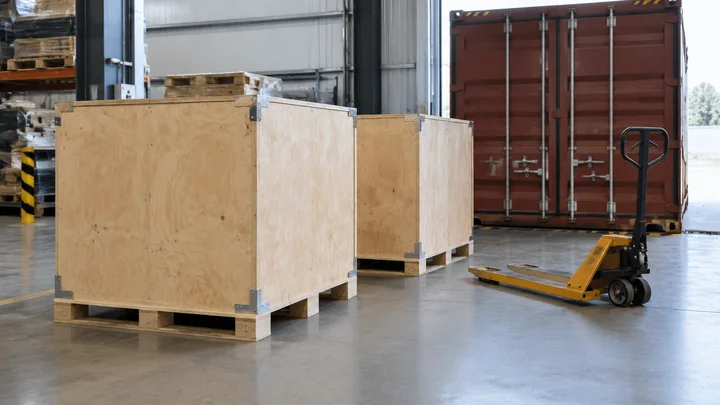
Fan Incoterms and Landed Cost: Name the Place, Then Compare
Compare industrial-fan quotations using the Incoterms rule, named place and itemized buyer costs. An equipment price is not a landed-cost quotation.
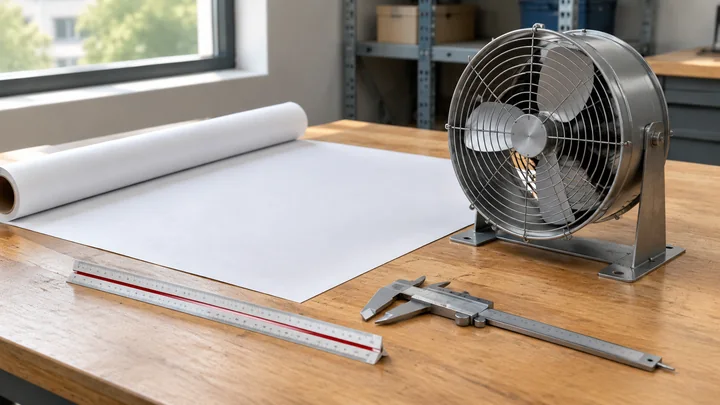
Fan Submittal Drawings: Ask for the Installed Envelope
A useful industrial-fan submittal drawing identifies the offered revision, interfaces, service space and open items. A brochure outline is not an installation drawing.
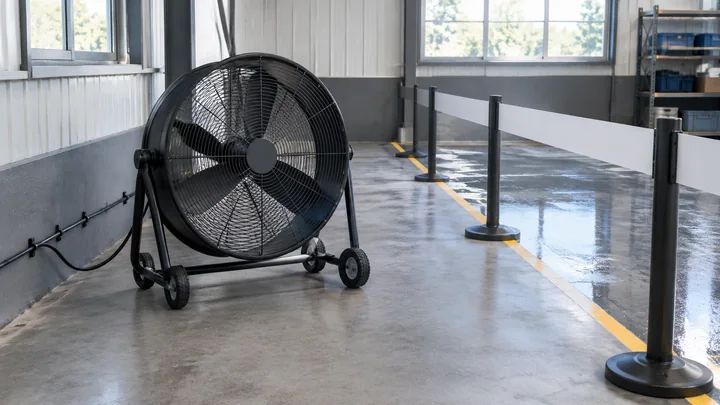
Fans for Wet Floors: Move Air Without Pretending to Remove the Water
A fan may assist evaporation from a wet floor, but placement must keep electrical equipment and routes suitable for the conditions and the wet area controlled.
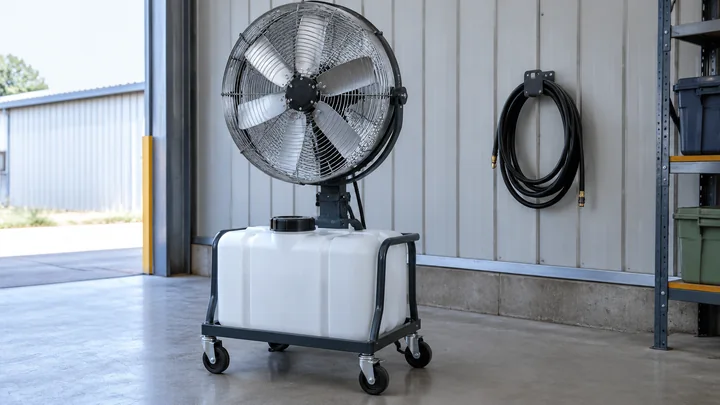
Mist Fan Water Connection: A Refill Tank Is Not a Plumbed Supply
A tank mist fan cannot be assumed suitable for continuous mains-water connection. Confirm the exact inlet, pressure limits and water-control arrangement first.
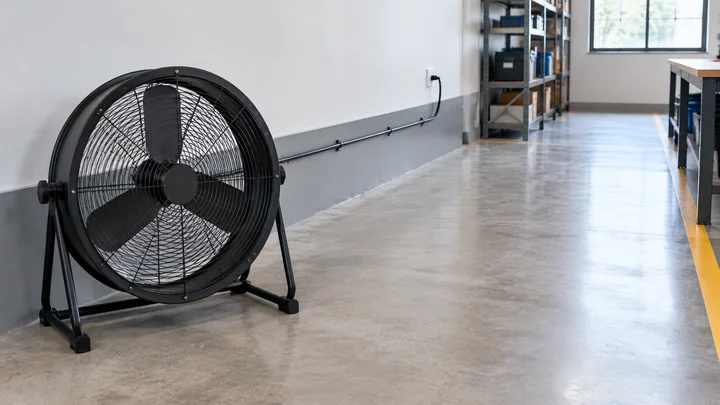
Fan Extension Leads: Check Voltage Drop and the Entire Cable Route
A longer fan cable can introduce voltage drop, but cable size, protection and extension-lead suitability require the actual electrical installation details.
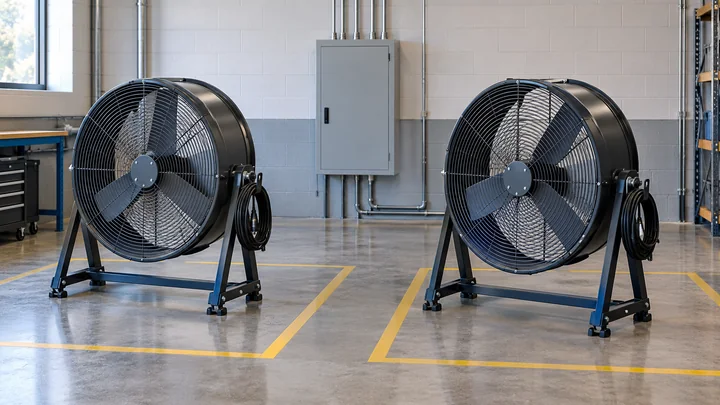
Several Fans on One Circuit: Running Amps Do Not Describe the Start
For several industrial fans, collect running and starting-current evidence for the complete offered package before agreeing simultaneous or staged starting.
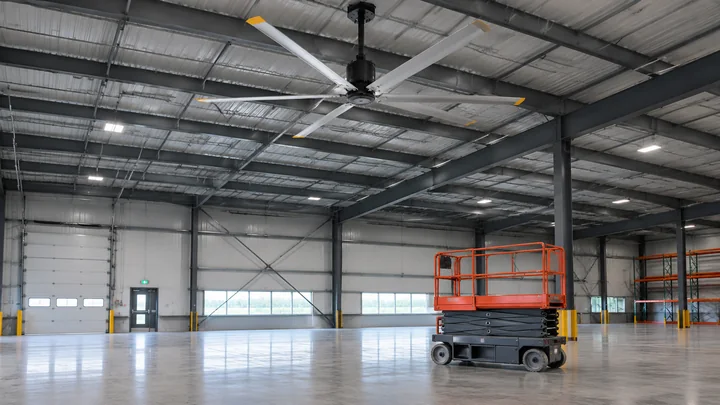
HVLS Maintenance Access: Plan How the Technician Reaches the Fan
Plan HVLS fan maintenance access around the work envelope, floor route, isolation and rotor position before choosing a platform.
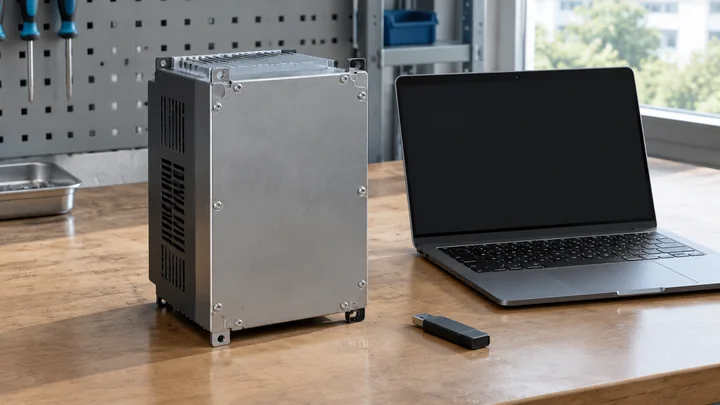
Fan VFD Parameter Backups: A File Is Not a Replacement Plan
A fan VFD backup must match the drive, firmware, motor and application. Copying a parameter file is not proof that a replacement is ready to run.
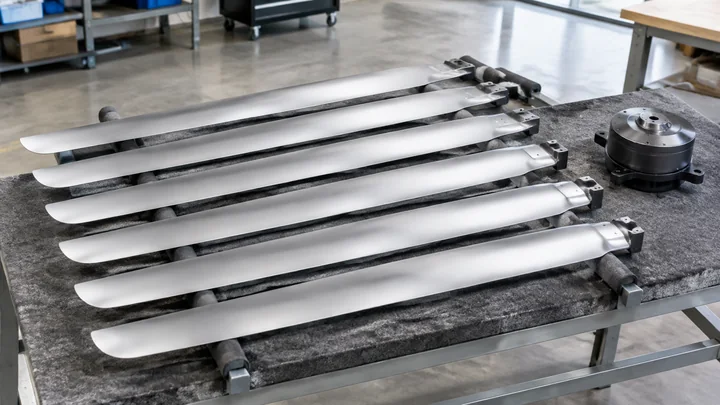
Replacement HVLS Blades: Check the Complete Rotor Identity
Replace HVLS fan blades through the supported service route. Matching length or buying a loose blade does not establish fit, balance or retained performance.

HVLS Bolt Torque Records: Keep the Joint and Revision Together
An HVLS fan bolt torque record needs the exact joint, fastener and applicable instruction. A generic torque number is not a maintenance record.

Warehouse Fan Control Zones: Follow the Work, Not Just the Roof Grid
Divide warehouse fan controls by occupancy, operating hours and local responsibility, not by a neat grid on a floor plan.

HVLS Fan Modbus Handover: Ask for the Register Map
For an HVLS fan BMS connection, request the actual protocol option, register map, scaling and failure behavior before promising integration.

Replacement Fan Remote: Match the Receiver, Not the Button Count
A replacement ceiling-fan remote must match the receiver and control generation. Similar buttons or radio frequency alone do not prove compatibility.

Fan Motor Insulation Class and Temperature Rise Are Not the Same
Insulation class describes a motor insulation system; temperature rise describes heating under stated conditions. Ask for both on the same operating basis.

PMSM Fan Motors: Buy the Motor and Controller as a Matched System
A PMSM fan motor needs a controller approved for its exact electrical and mechanical configuration. Match the pair before buying a replacement.

Single-Phase or Three-Phase Fan: Read the Drive Input First
Compare the site supply, controller input and motor output separately before ordering a single-phase or three-phase industrial fan.

Industrial Fan Sample Orders: Agree the Pass Criteria Before Paying
Agree a sample fan acceptance plan before payment: configuration, included parts, inspection conditions, discrepancy handling and what approval does not cover.

Fan Declaration, Certificate or Test Report: Match the Model First
A declaration, certificate and test report answer different questions. Check issuer, product identity, scope and configuration before using any document as purchase evidence.
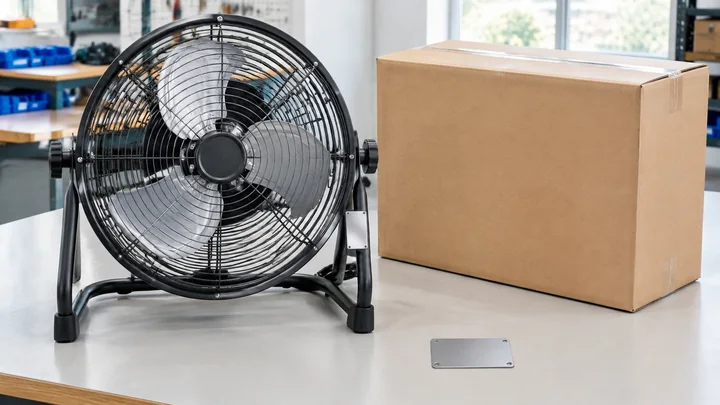
Private-Label Industrial Fans: Approve the Identity Before the Carton
Before requesting a private-label fan, agree the exact model, legal identities, nameplate data, manual and packaging changes. A logo change is not a complete OEM specification.

FRP Fan Housing and Blades: Put Each Material on Its Own Line
An FRP fan casing does not prove FRP blades. Specify material separately for the casing, rotor, guard, fasteners and support before comparing proposals.

Fan Inches to Millimetres: Rotor Size Is Not Frame Size
Convert nominal fan inches to millimetres, then request the actual rotor, guard and frame dimensions. An inch label is not a door-clearance drawing.

Fan Blade Tip Speed: Diameter × RPM Is Only the Beginning
Calculate geometric blade-tip speed from rotor diameter and RPM. Keep tip speed separate from delivered airspeed, airflow, noise and safety approval.

A Fan at a Container Door: Do Not Block the Only Exit
At a container loading mouth, preserve the loading envelope before discussing local air circulation. A portable fan is not proof of safe container ventilation.

Fans Near Lightweight Packaging: Test the Loose Material, Too
Before placing a fan beside light cartons, film or labels, test product stability and useful air movement together. More speed is not automatically a better result.
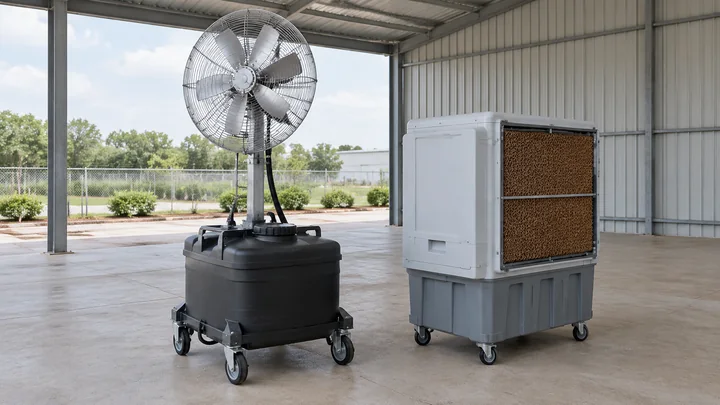
Mist Fan or Evaporative Pad Cooler: Where Does the Water Go?
A mist fan releases droplets into the air; an evaporative pad cooler passes air through wetted media. Compare the water path and site constraints first.
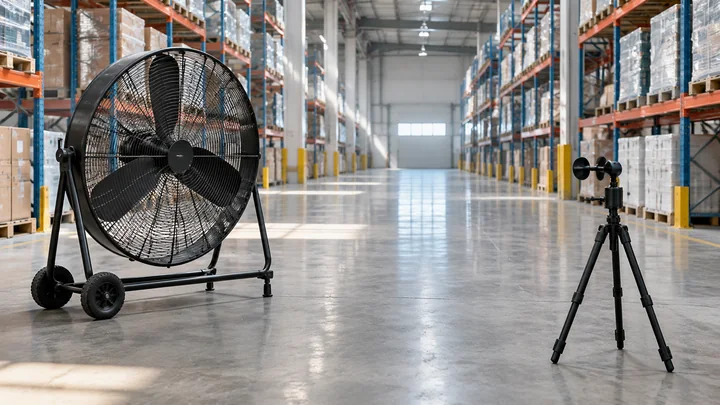
Industrial Fan Throw Distance: Ask ‘At What Airspeed?’
A fan throw-distance claim needs a terminal airspeed, measurement layout and operating setting. Ask what the quoted metres actually mean.
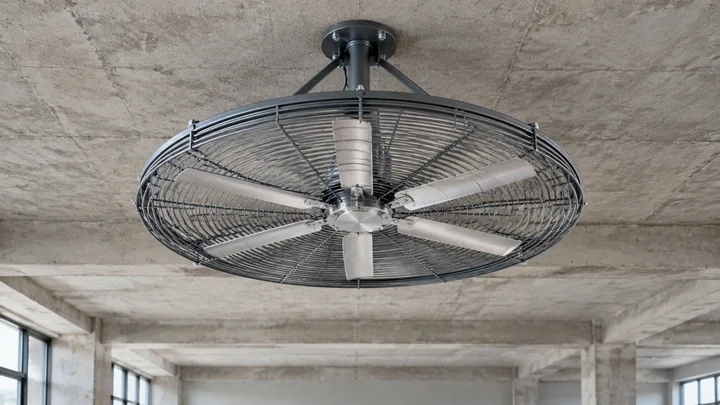
Low-Profile Shunt Fan or HVLS: Start With Available Headroom
Compare a low-profile guarded shunt fan and an open HVLS rotor by complete installed depth, access and the occupied air path—not by the word low-profile.

Wall Fan Oscillation Clearance: Measure the Moving Head
A wall fan needs space for its complete oscillation path, bracket and cable movement. Record the moving envelope before choosing the mounting position.
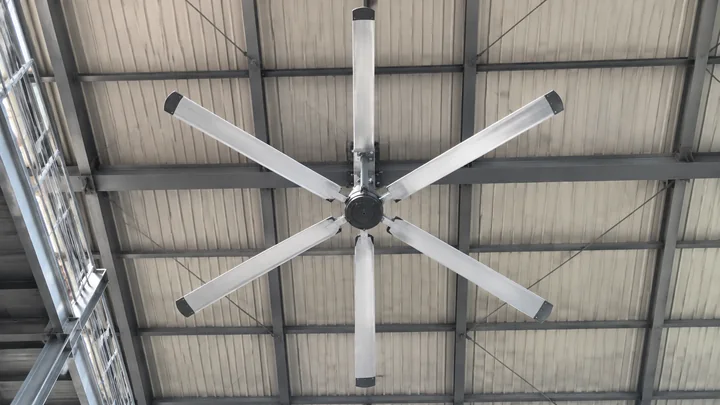
HVLS Fans Near Mezzanines: Include the Upper Walking Level
An HVLS fan near a mezzanine must be assessed from the upper walking surface, stairs and access points—not only from the warehouse floor.

HVLS Fans in a Rented Warehouse: Agree the Exit Plan First
For a rented warehouse, compare permission, roof modifications and end-of-lease reinstatement before deciding whether an HVLS installation is worth pursuing.
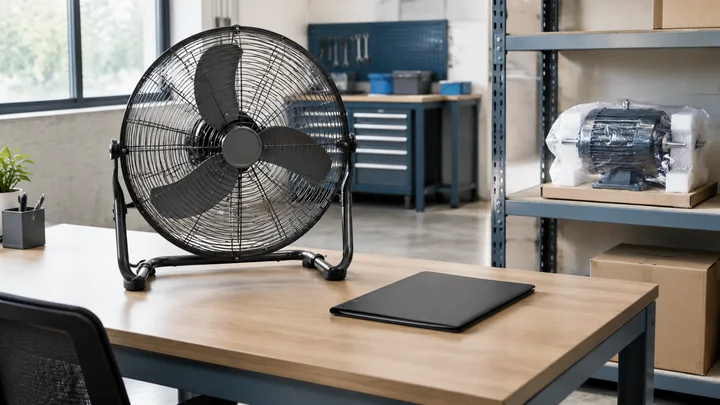
Industrial Fan Warranty: Who Pays for the Service Visit?
A warranty period is not a service plan. Set out parts, labour, access equipment, travel and freight responsibilities before ordering an industrial fan.

Fan Shipping CBM and Dimensional Weight: Measure the Packed Load
Calculate fan shipment CBM from the outside of every packed piece. Keep volume, actual mass and the carrier’s chargeable-weight rule separate.
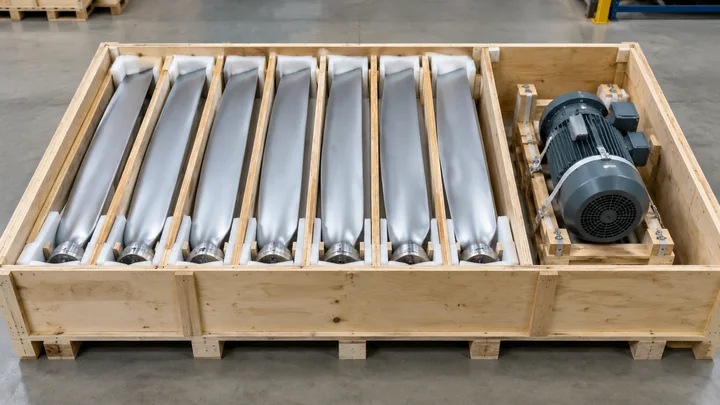
Industrial Fan Export Packaging: Specify What the Crate Must Protect
For an industrial fan shipment, specify component restraint, separation, moisture protection and the receiving evidence before choosing a crate.
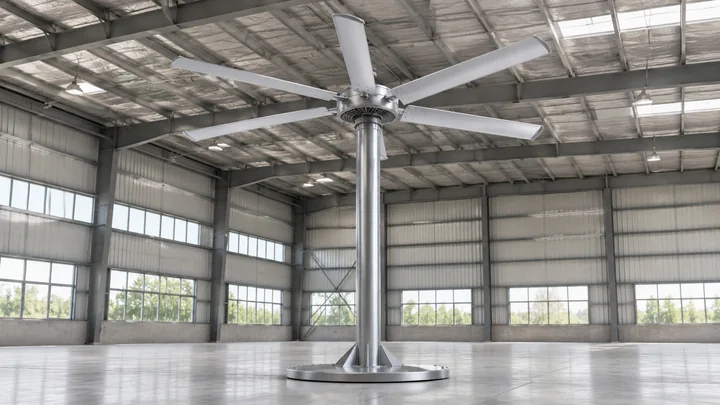
Freestanding Pole Fan or Ceiling HVLS: Where Does the Load Go?
A floor-supported horizontal-rotor fan avoids a roof attachment but creates a different load path, floor footprint and collision problem.
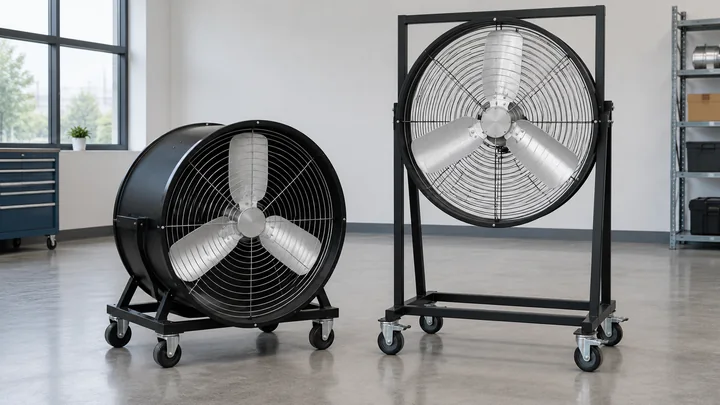
Drum or Open-Frame Fan: Compare the Air Path, Not the Shell
A drum housing and an open frame change handling and the air path. Compare complete dimensions and comparable performance evidence, not appearance.
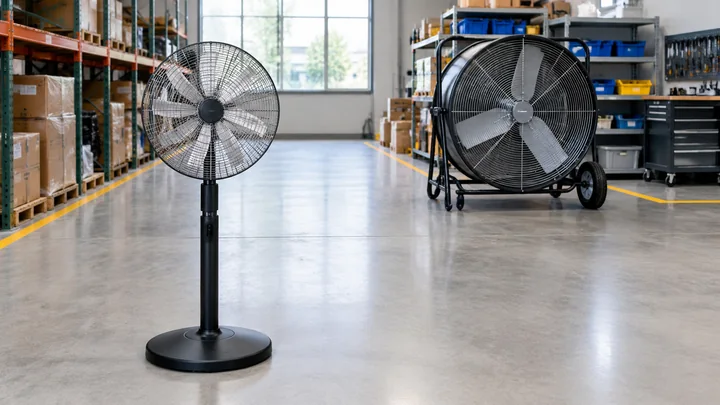
Battery or Corded Industrial Fan: Plan the Whole Shift
Choose battery or mains power by the working day: available sockets, relocation, charging windows and what happens when the battery runs out.
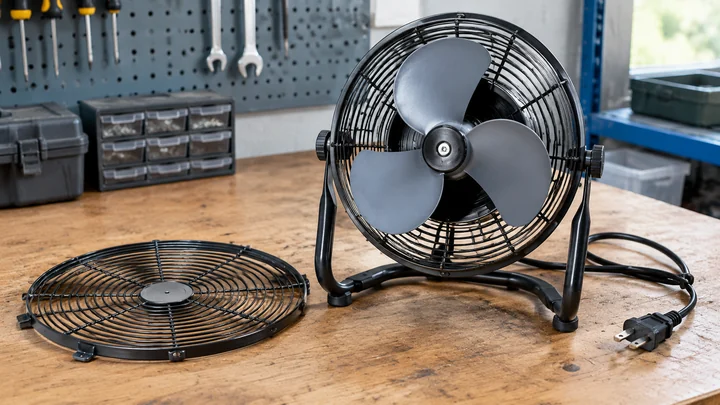
Fan Guard Cleaning Access: Check the Service Job Before Buying
A removable guard may still be awkward to clean in the installed position. Check access, isolation and reassembly before accepting a maintenance promise.

Workstation Airspeed Survey: Measure Where People Actually Work
A strong reading at the fan outlet says little about a person behind a packing bench. Measure the occupied work position and retain the conditions of the...
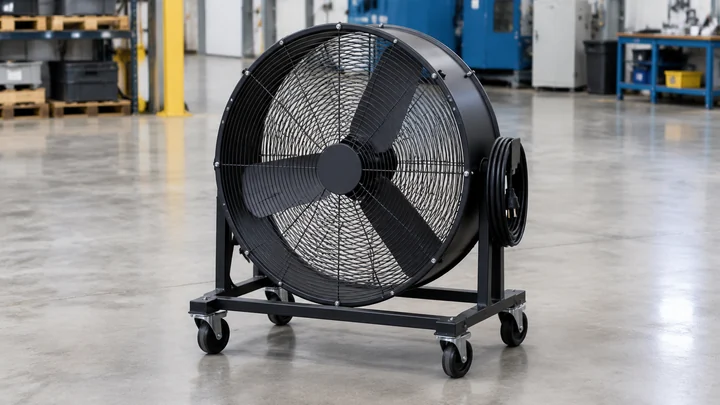
Portable Fan Stability: A Brake Does Not Prevent Every Tip
A caster brake can resist rolling without preventing a fan from tipping. Check the complete frame, adjustment and placement conditions rather than one...
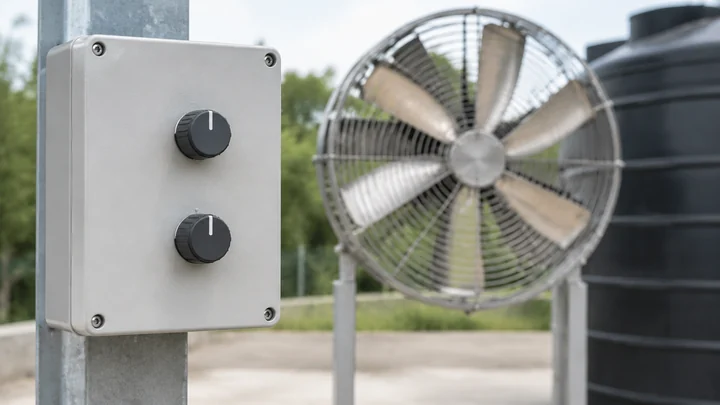
Mist Fan Controls: Confirm Fan-Only Operation Before Buying
Two knobs in a photograph do not prove independent fan and water control. Request the operating sequence, then check the functions on the offered...

Mist Fan Drift: Keep Water Away From Dry Goods and Controls
A mist plume does not stop where a sales image ends. Map the dry goods, controls and walking routes before deciding where water can be released.
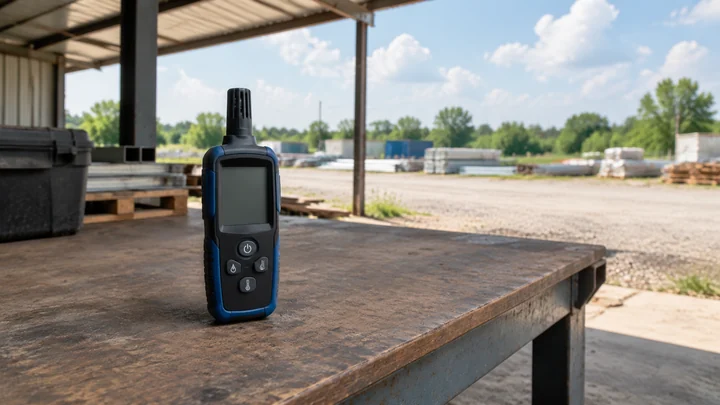
Mist Fans in Humid Weather: Check Whether the Water Can Evaporate
A mist fan can move air when the weather is humid. Whether adding water helps is a different question: check evaporation and wetting at the actual work area.

Static or Total Fan Pressure: Compare Like With Like
A pressure number without its definition can make a weaker selection look stronger. Keep static and total pressure on separate lines until the basis is...

Fan Efficiency: Ask Where the Power Measurement Starts
Two efficiency percentages can disagree because they measure different boundaries. Ask where the power measurement starts before comparing them.

Fan Selection at Altitude: Keep Actual Airflow and Density Together
A sea-level fan curve and a mountain-site airflow requirement can look compatible until the density basis is checked. Keep the quantities together.
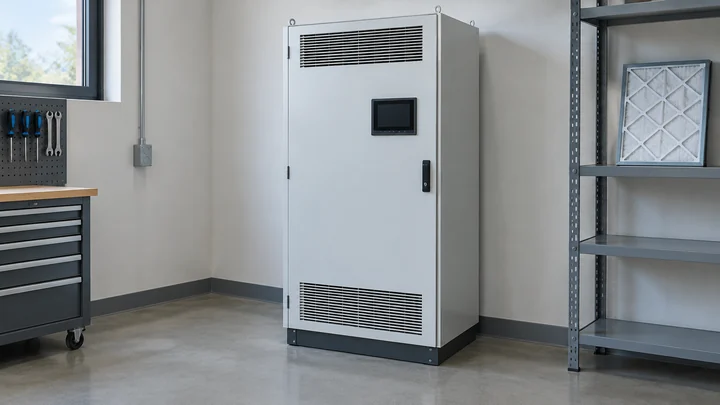
Fan Drive Cabinet Cooling: Check the Air Around the Controller
The workshop may feel cool while the drive sits in a hot pocket behind a blocked cabinet filter. Specify the controller’s own environment.

0–10 V or 4–20 mA Fan Control: Match the Signal Before Wiring
“Analog control” is not enough information for a controls contractor. Voltage, current, reference and scaling must agree at both ends.

Fan VFD Ramps: Acceleration Time Is Not a Guaranteed Stop Time
A short acceleration setting is not a better specification by itself. The drive, motor and rotor must be able to follow it without an avoidable trip.
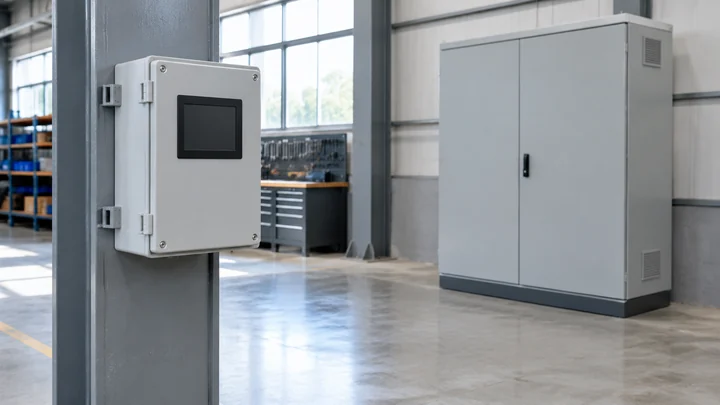
Local or Remote Fan Control: Decide Who Owns the Command
A wall control, remote handset and building controller can all ask for different things. Decide whose request wins before connecting them.

Fan Start Command, Run Feedback and Airflow Proof Are Different
A dashboard saying “run” can mean a command was sent, a drive is active or airflow was actually proved. Those are three different answers.

VFD Output Disconnects: Do Not Treat the Motor Switch as a Start Button
A convenient motor-side switch can create an inconvenient drive fault. Resolve the disconnect’s purpose and sequence before adding it to the fan circuit.

Long VFD Motor Cables: Check the Drive-to-Motor Route
Measure the cable route from drive output to motor, not the straight-line distance across the building. Cable choice and drive settings travel with that...
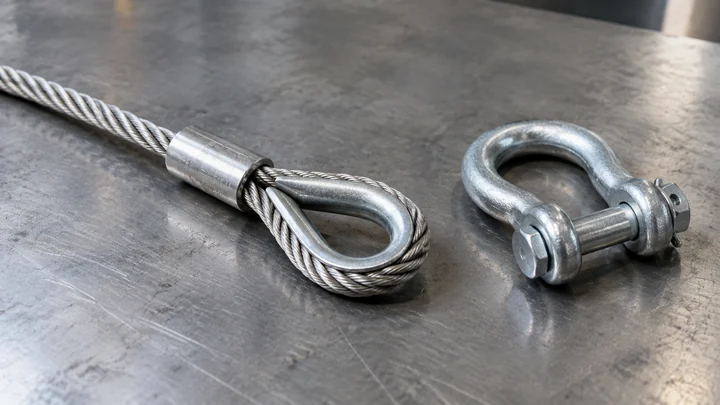
HVLS Safety Cables: Inspect Secondary Retention as Its Own System
A safety cable is not a decorative extra above the motor. Its condition, attachments and inspection access deserve their own line in the handover record.

HVLS Fan on a Sloped Ceiling: Survey Before Choosing the Mount
Roof pitch is only one part of a ceiling-fan mounting decision. The supporting member, mount articulation and a vertical fan axis need separate checks.

HVLS Fans Near Overhead Cranes: Map the Whole Moving Envelope
A crane parked clear of a fan tells you little about tomorrow’s lift. Survey the bridge, trolley, hook and load movement before proposing an HVLS location.
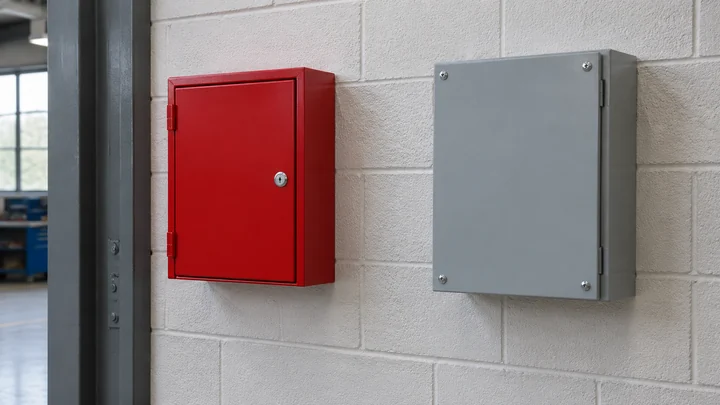
HVLS Fire Shutdown: Agree the Interface Before Ordering
A fire-shutdown requirement is an interface agreement, not a box to tick next to “remote control”. Settle the signal, stop action and reset ownership...

Industrial Mist Fan vs Regular Fan: When Is the Water Worth It?
Compare an industrial mist fan with a regular circulation fan: humidity, moisture-sensitive work, water supply, cleaning and a practical trial before buying.
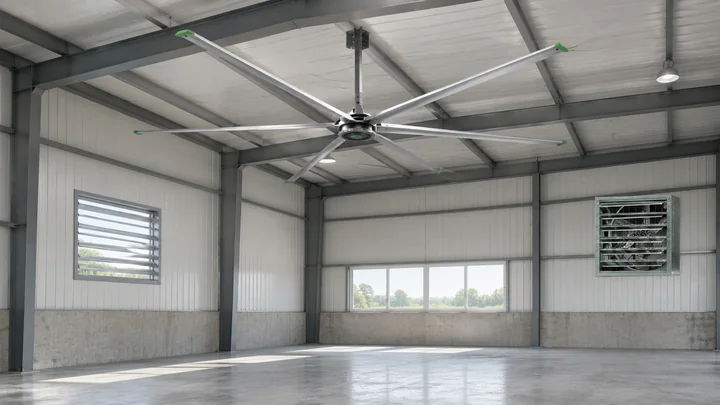
HVLS Fan vs Exhaust Fan: Which Job Does Your Building Need?
Compare HVLS and exhaust fans by the job they do, not headline CFM. See when a building needs both, how to separate their airflow and what to ask suppliers.

Battery Fan Buying Checklist: Battery, Charger and AC Adapter
Check whether a battery industrial fan quotation includes the battery, charger and an AC-running adapter. Distinguish charging from mains operation.
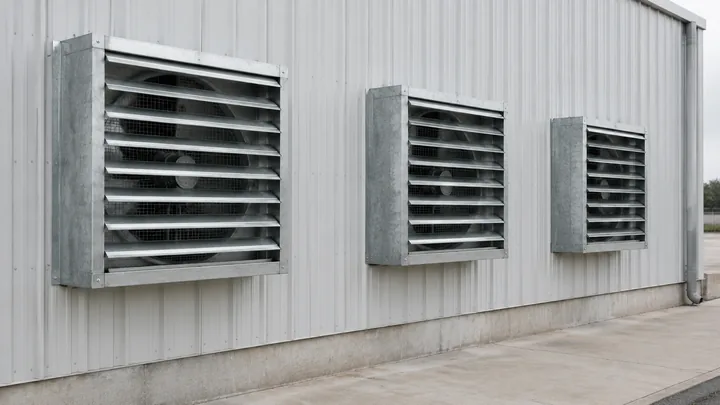
Multiple Wall Exhaust Fans: Staging and Stopped-Fan Backflow
Plan staged wall-exhaust fans using the shared system curve, make-up air and stopped-fan paths rather than multiplying free-air catalog ratings.
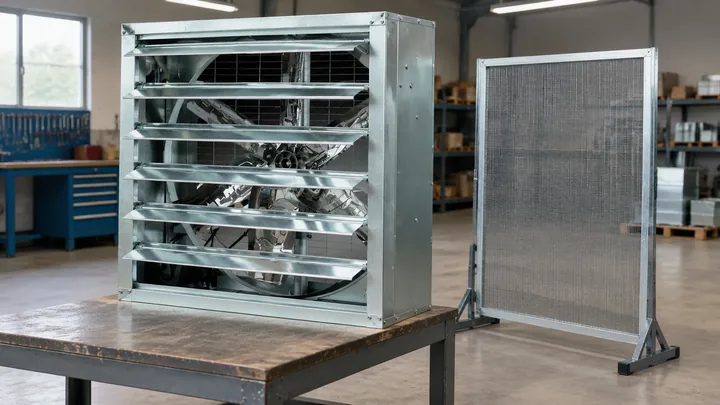
Exhaust Fan Bird and Insect Screens: Check the Pressure Drop
Assess exhaust-fan bird guards and insect screens as part of the air path, including resistance, fouling, access and the installed fan duty.
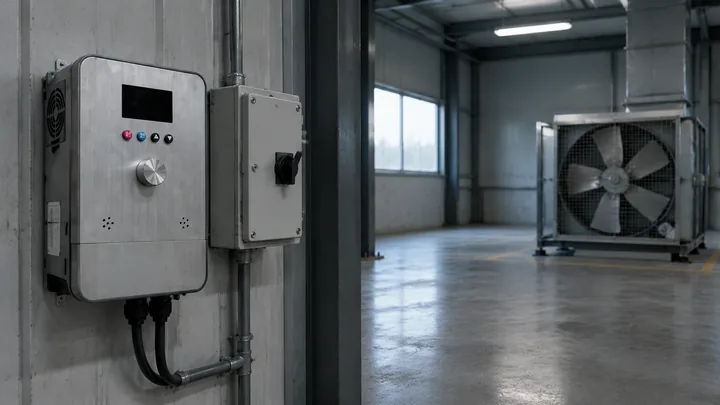
Fan Restart After a Power Outage: Specify the Behavior
Specify industrial fan power-return behavior by separating retained settings, start commands, restart permission and operator checks before handover.
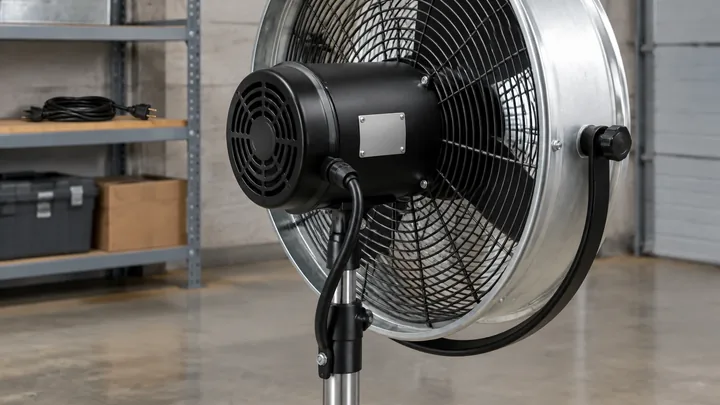
Fan Nameplate Amps, Watts and VA: What Buyers Can Compare
Read fan nameplate current, input power and apparent power correctly. Learn why volts times amps is not normally the actual running watts.
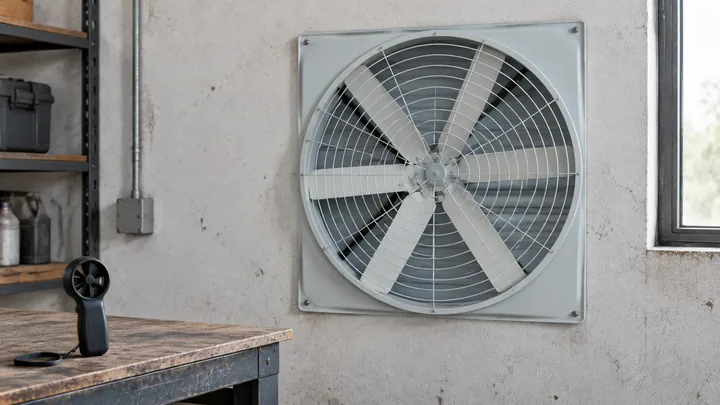
Fan Airflow: Convert m³/min to CFM Without Mixing Ratings
Convert fan airflow from m³/min or m³/h to CFM with worked arithmetic, then check pressure and test conditions before comparing catalog figures.

Remote, Touch Panel or VFD: Which Fan Control Fits?
Compare industrial fan remote controls, touch panels and VFD interfaces by operator task, permissions, feedback and compatibility instead of interface appearance.

Ceiling Fan With Light: Confirm Separate Controls
Specify a ceiling fan with light by checking independent switching, dimming, control pairing and the supplied lighting components before accepting a quotation.

HVLS Fan Blade Count: Why More Blades Is Not a Rating
Compare five-, six- and eight-blade HVLS fans using documented airflow, power, sound and mounting requirements rather than blade count as a performance score.

FRP or Aluminium Fan Blades: Compare the Complete Rotor
Compare FRP and aluminium industrial fan blades using duty, construction, environment and replacement evidence. Material alone does not prove suitability.
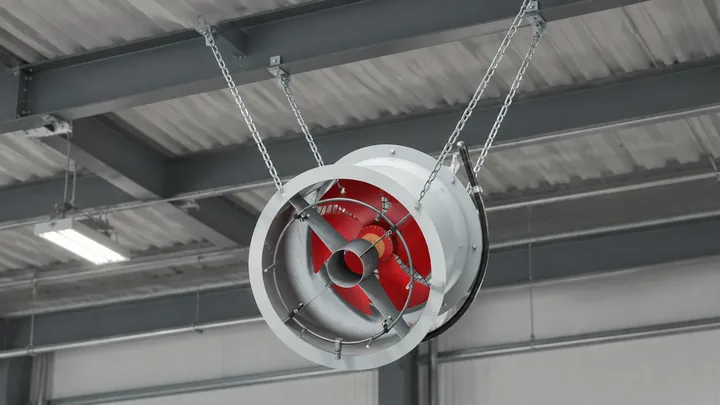
Suspended or Wall Mist Fan: Compare Access, Not Just Reach
Compare suspended and wall-mounted mist fans through support, mist drift, reservoir location and service access. Avoid assuming a high position solves coverage.
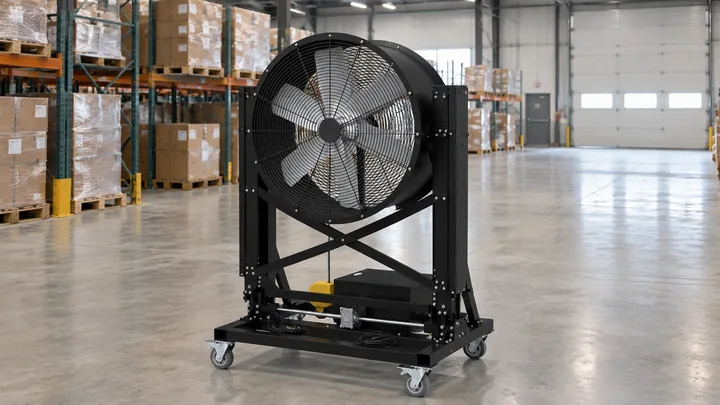
Logistics Lift Fan: Separate Height Adjustment and Moving
Specify a logistics lift fan using approved raised and lowered conditions, handling instructions and clearances rather than inferring behavior from a scissor frame.
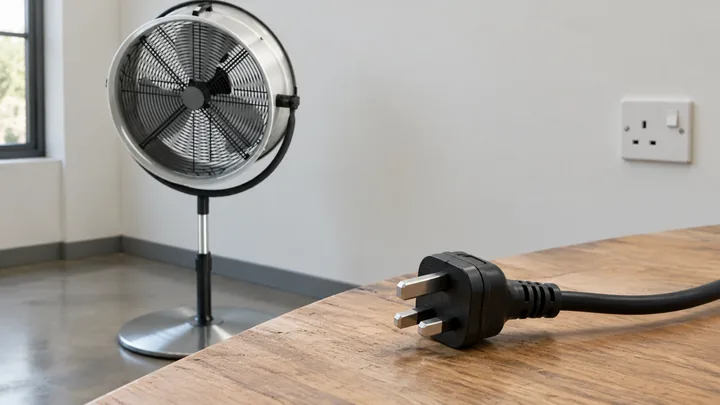
Industrial Fan Plug and Socket: Confirm Supply Fit
Check industrial fan voltage, frequency, phase, plug, socket and extension-lead requirements as one complete supply arrangement before shipment.
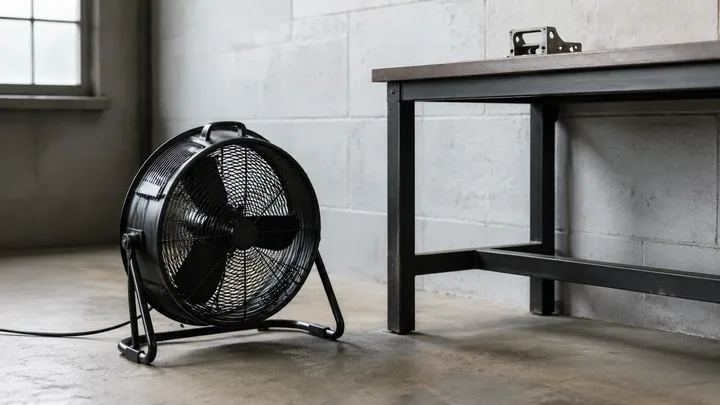
Tilting Floor Fan or Pedestal Fan: Match Working Height
Compare tilting floor and pedestal industrial fans by occupied working height, obstructions, footprint and adjustment access rather than appearance.

Large Mobile Fan Door Clearance: Measure the Whole Frame
Check a large mobile fan against doors, handles, casters, thresholds and turning space. Blade diameter alone does not define its movement envelope.

Mobile Fan Caster Brakes: Check the Floor Before Buying
Specify industrial fan casters using the actual floor, operating mass and brake function. Distinguish wheel locking from swivel locking and stable placement.

Wall Mist Fan Loads: Where Will the Full Tank Sit?
Separate wall-mounted mist fan head loads from reservoir wet weight, hose support and service access before approving a bracket or installation position.
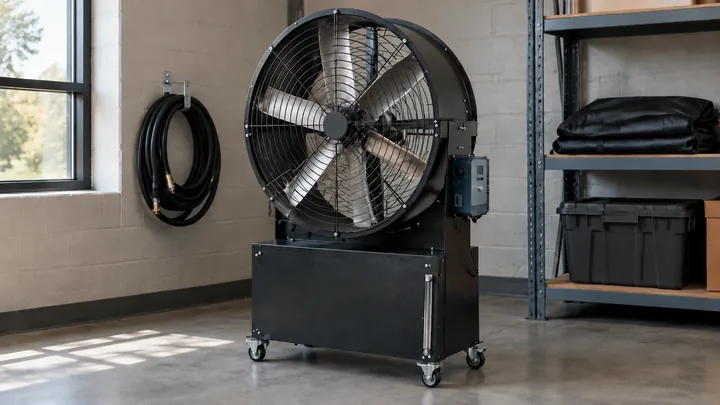
Mist Fan Seasonal Storage: Empty Tank Is Not Enough
Prepare a mist fan for seasonal storage by documenting isolation, reservoir cleaning, residual water paths and the checks needed before recommissioning.
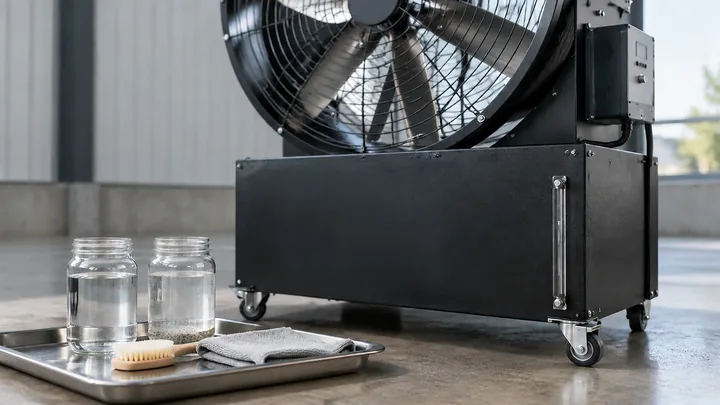
Mist Fan Water Quality: Scaling and Cleaning Questions
Choose a mist fan water supply using model-specific water requirements, deposit checks and a workable cleaning routine, without guessing chemical treatments.

Mist Fan Water Consumption: Plan Refills, Not Guesswork
Calculate mist fan tank runtime from usable water and measured consumption. Separate water use, refill workload and battery runtime before ordering.

Industrial Fan VFD Fault Troubleshooting: Keep the Evidence Before Reset
Build a useful industrial fan VFD fault record: exact controller, complete message, event timing, operating conditions and the correct manual before reset.
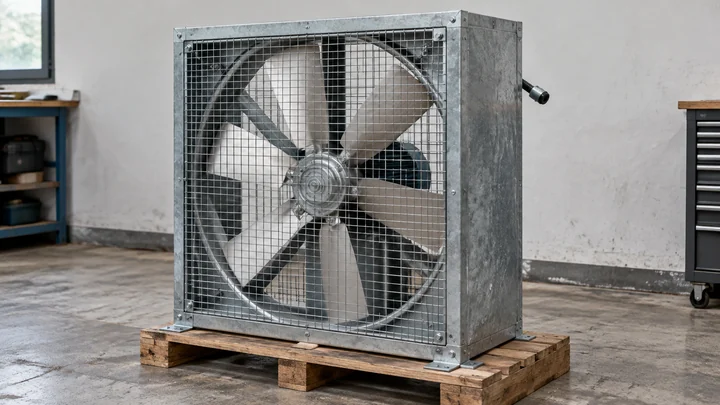
Axial Fan Rotation Direction: Say Which Side You Are Looking From
Verify axial fan rotation from the exact model marking and stated viewing side. Separate rotation, airflow direction and low-flow diagnosis.

50Hz vs 60Hz Industrial Fans: Check the Whole Electrical Chain
Check 50Hz and 60Hz industrial fan compatibility without confusing supply frequency, VFD output, motor data and actual fan speed.
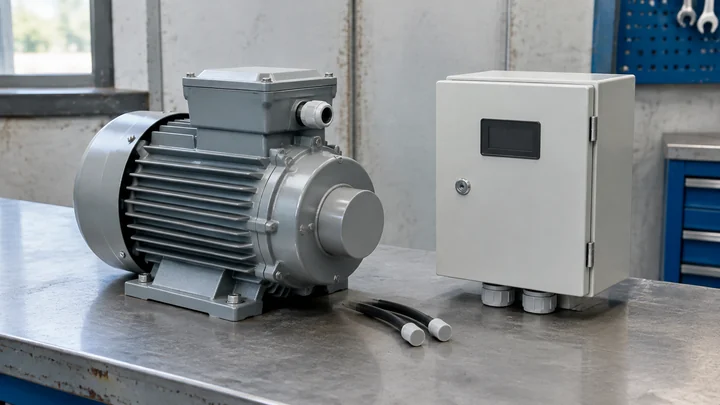
Industrial Fan IP Rating: Which Part Is Actually Protected?
Read an industrial fan IP rating component by component. Check the motor, controller and cable entries before assuming outdoor or washdown suitability.
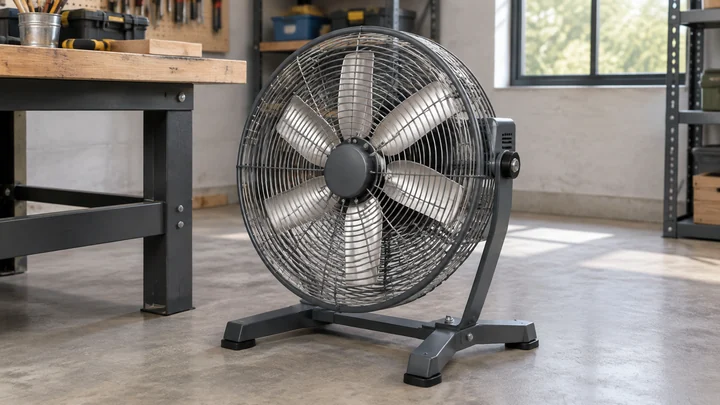
Battery Industrial Fan Runtime: Ask What Those Hours Include
Check battery industrial fan runtime against speed, battery energy, condition and a defined end point. Understand why DC24 V and a catalog four-hour note are not enough.
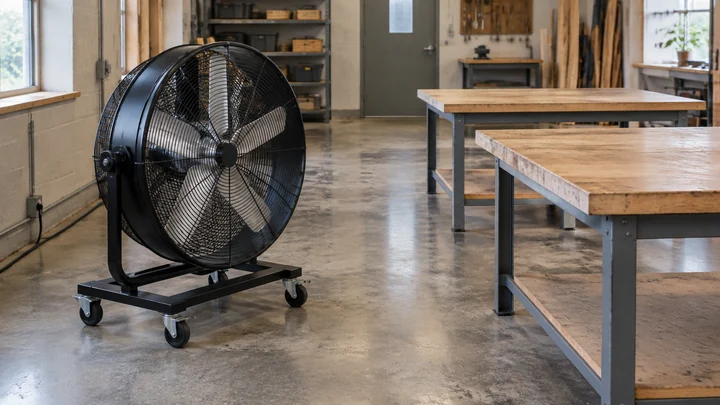
Oscillating vs Fixed Industrial Fans: Does the Work Need a Sweep?
Compare oscillating and fixed-direction industrial circulation fans by work positions, dwell time, obstructions and process sensitivity. No invented coverage claims.

Wall-Mounted vs Mobile Industrial Fans: Where Can the Fan Actually Live?
Choose a wall-mounted or mobile industrial circulation fan by support, floor space, work-cell changes and service access—not diameter alone. Includes a site checklist.
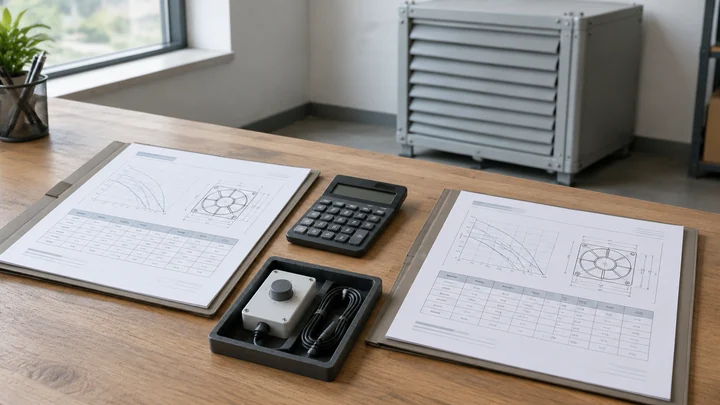
Industrial Fan Quotation Comparison: Make the Two Offers Comparable
Compare industrial fan quotations on the same duty, dimensions, controls and delivered scope. Separate confirmed items, exclusions and missing evidence before price.
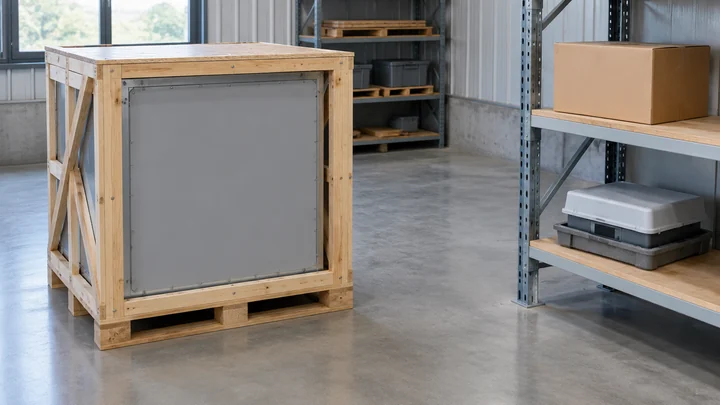
Industrial Fan Storage Before Installation: Keep the Delay from Becoming Damage
Plan industrial fan storage before installation around moisture, packaging limits, component instructions, inspection records and a documented release to site.

Industrial Fan Receiving Inspection: Before the Delivery Disappears
Check an industrial fan delivery against its packing list, record damage and shortages, and preserve the evidence needed before installation or a freight claim.
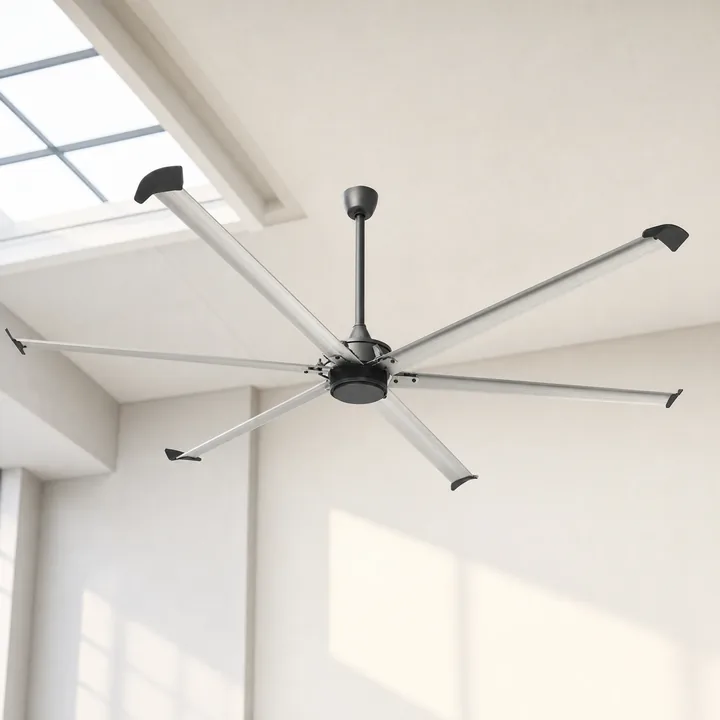
HVLS Fans For Manufacturing Facilities
Plan HVLS fans around occupied manufacturing zones, moving crane loads, source extraction, maintenance and sprinkler coordination—not floor area alone.
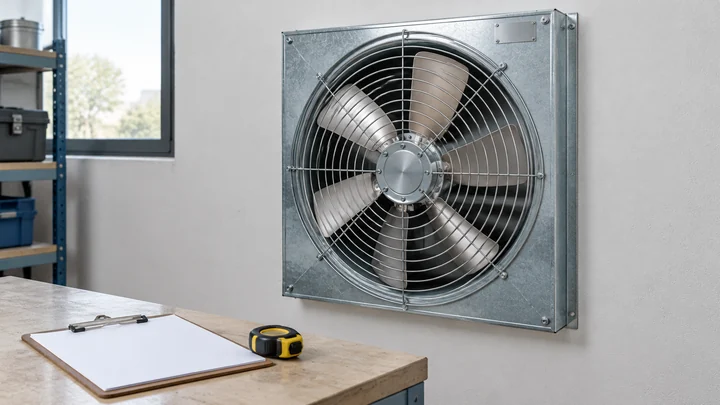
Industrial Fan Replacement By Nameplate
Replace an industrial fan using the fan and motor IDs, duty, dimensions, rotation, controls and materials—not horsepower or diameter alone.
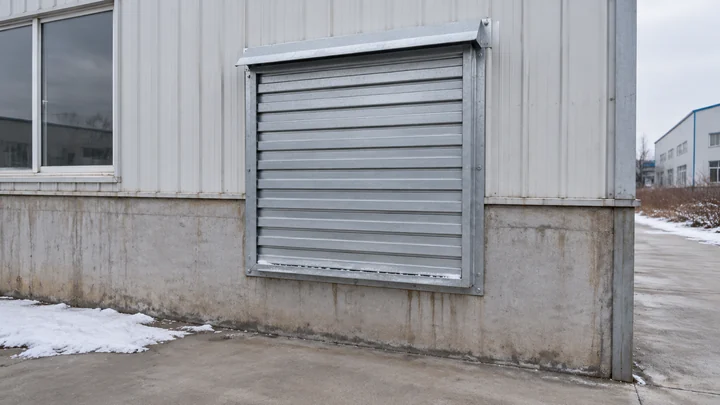
Industrial Fan Freeze Protection
Prepare an industrial fan for freezing weather: check water retention, shutters, cold-service limits, shutdown ownership and release-to-restart records.

Industrial Fan Condensation Prevention
Find whether fan moisture comes from condensation, rain or cleaning. Record surface temperature, humidity and shutdown timing before specifying a remedy.

Industrial Wall Exhaust Fan Installation
Plan a wall exhaust fan installation: agree support, weather sealing, shutter travel, make-up air, electrical handover and commissioning responsibilities before fitting.

Industrial Fan RPM Selection: Start With The Duty, Not The Number
Choose industrial fan rpm from airflow, pressure and the exact model curve. Separate motor speed, fan-shaft speed and VFD frequency, with a belt-ratio example.

Industrial Fan Laws: What A Speed Change Really Changes
Calculate fan speed, airflow, pressure and shaft-power ratios with a worked example. Understand when system resistance, motor limits and efficiency change the result.
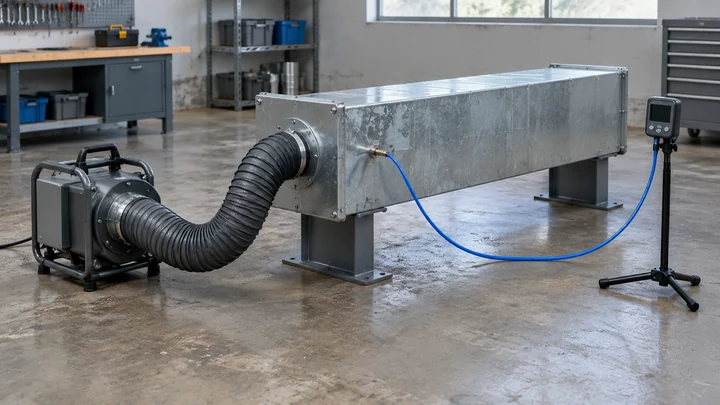
Industrial Fan Duct Leakage Testing: What the Result Must Include
Plan a duct leakage test around a defined section, pressure and acceptance basis. Keep leakage flow separate from fan airflow commissioning.
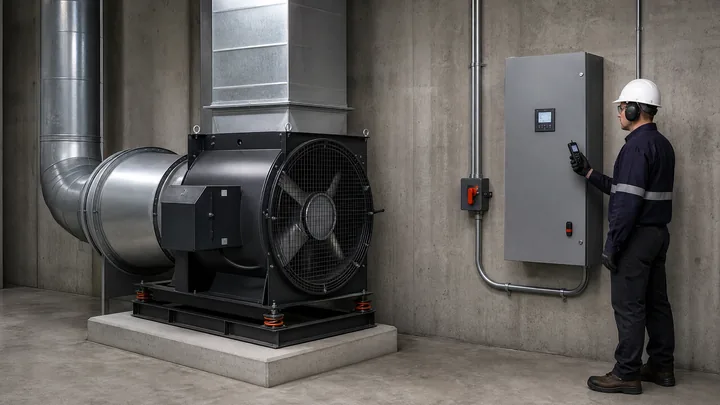
Industrial Fan Motor Overload Check: Nameplate, VFD And Protection Scheme
Compare motor nameplate FLA, VFD overload settings and project protection evidence before accepting an industrial fan motor overload check; no universal setting.
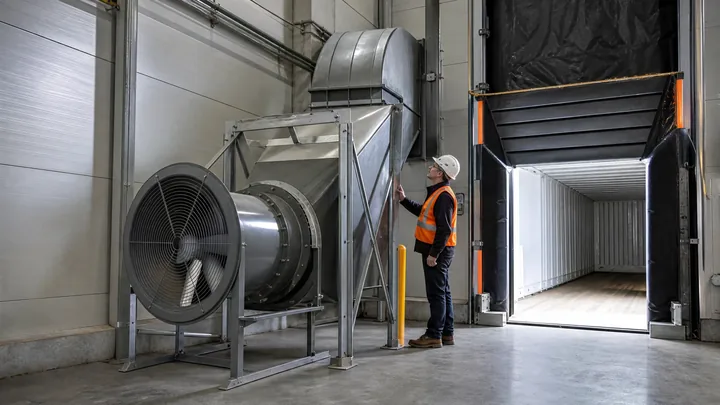
Industrial Fans For Loading Docks
Plan loading-dock ventilation from vehicle emissions, door cycles, wind, occupied paths, make-up air, weather, noise, controls and the actual operating schedule.

Industrial Fans For Boiler Rooms
Assess boiler-room fans by separating combustion air, room heat removal, flue or process exhaust, make-up air, pressure relationships, controls and access.

Industrial Fans For Compressor Rooms
Plan compressor-room ventilation from heat rejection, compressor duty, intake and discharge paths, noise, service access, weather, controls and required operating states.

Chemical Storage Exhaust Fan Selection
Select chemical-storage exhaust equipment from inventory, vapor or aerosol behavior, compatibility, temperature, hazardous-area basis, containment and emergency sequence.
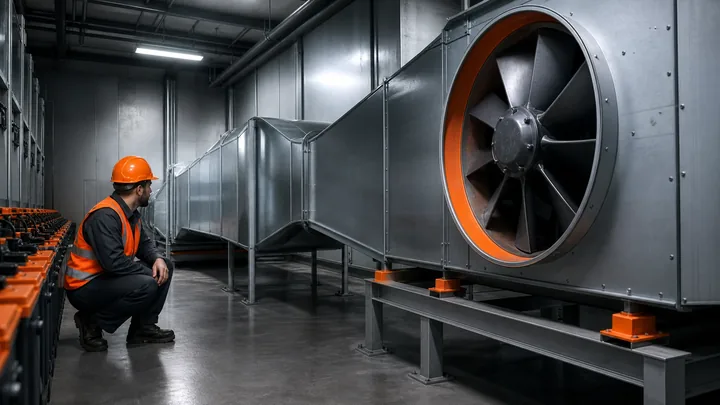
Battery Room Ventilation Fans
Assess battery-room ventilation by identifying chemistry, charging state, room volume, release scenario, air path, controls, alarms and applicable safety requirements.
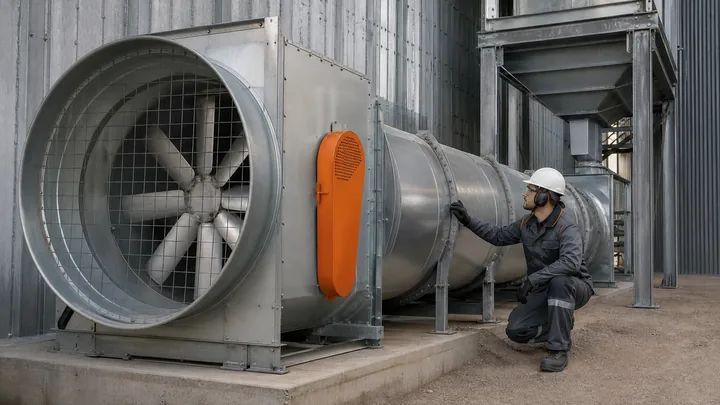
Grain Storage Ventilation Fans
Plan grain-storage ventilation from commodity condition, moisture, temperature, dust, bin geometry, airflow path, monitoring, cleaning and the protection basis.

HVLS Fans For Paper Warehouses
Assess HVLS fans for paper warehouses using storage height, paper stability, aisle traffic, humidity, fire protection, loading doors, clearances and airflow pattern.

HVLS Fans For Textile Factories
Evaluate HVLS fans in textile factories by mapping fibers, looms, heat, worker zones, sprinkler and lighting clearances, cleaning and the intended air movement.
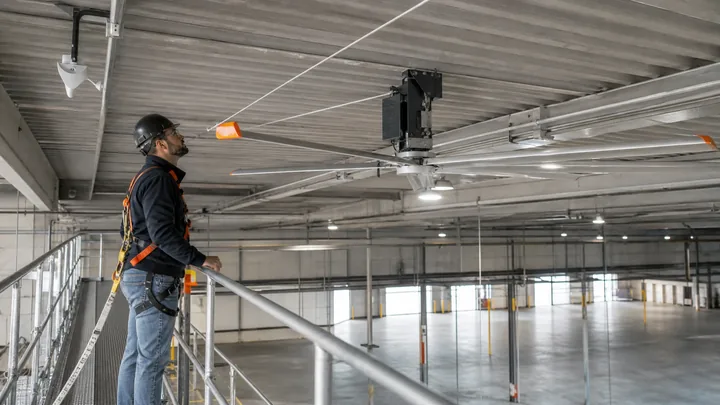
HVLS Fan Occupancy Sensor Control
Design HVLS fan occupancy control by defining zones, sensor coverage, delay, speed limits, manual override, restart behavior and the condition to verify.
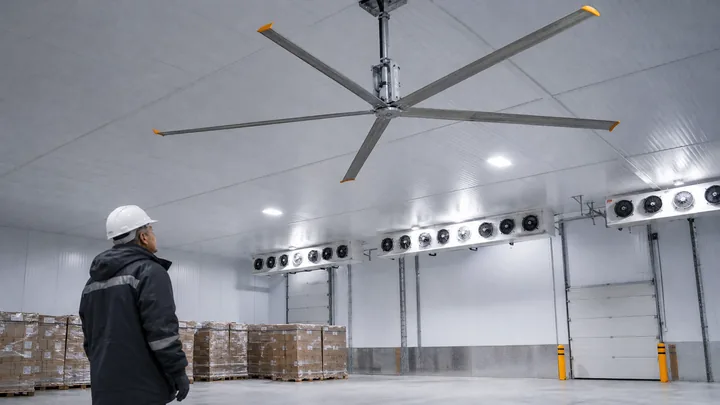
HVLS Fans In Cold Storage Facilities
Assess HVLS fan use in cold storage by checking setpoint, product sensitivity, racking, evaporator airflow, defrost, condensation, clearances and control logic.

Industrial Fan Maintenance Access Panel Planning
Plan maintenance access panels around the inspection task, isolation boundary, component removal path, guarding, cleaning and safe access—not panel size alone.
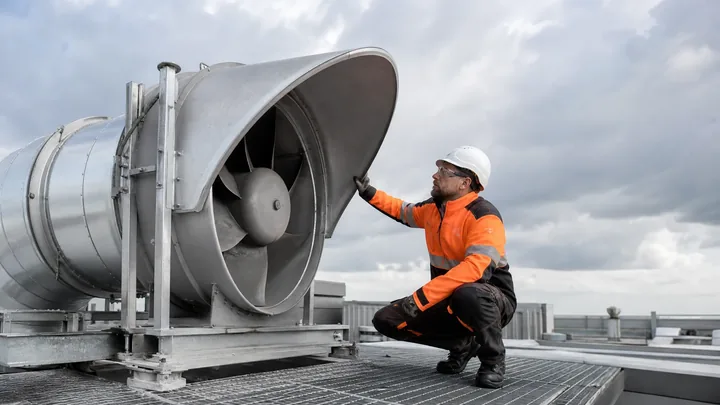
Industrial Fan Roof Discharge Design
Plan a roof discharge by checking discharge direction, plume behavior, building openings, wind, weather protection, curb, structure, access and the fan system effect.
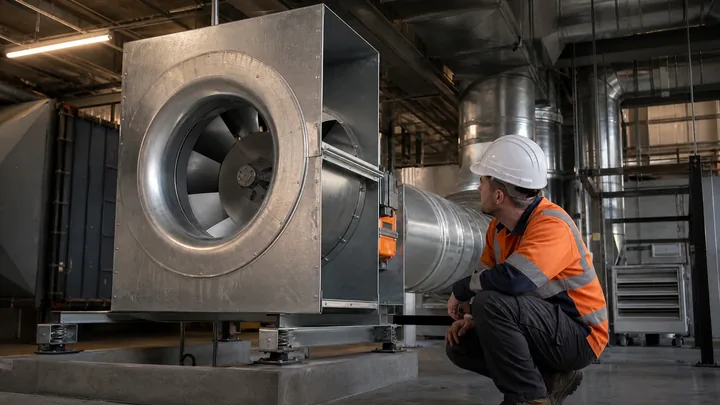
Industrial Fan Duct Velocity Selection
Choose a practical duct-velocity range from material, dust or moisture behavior, noise, pressure loss, erosion, settling risk, space and fan operating point.

Industrial Fan Coastal Corrosion Selection
Select fans for coastal exposure by checking salt deposits, direct spray, cleaning chemicals, component materials, drainage, coating damage and maintenance access.
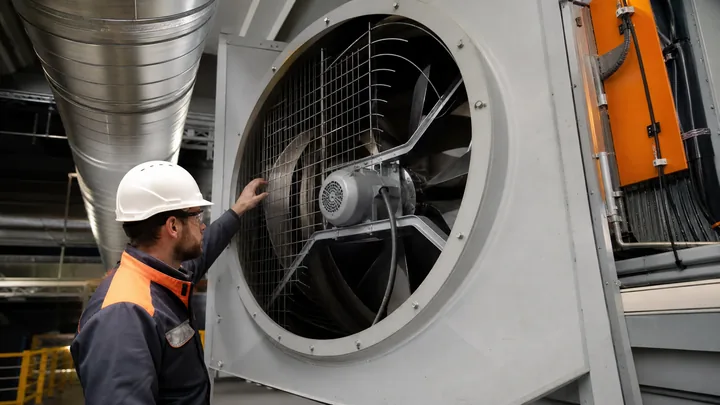
Industrial Fan Temperature Derating
Assess industrial fan temperature derating from airstream temperature, ambient conditions, density, motor limits, materials, bearings and control range.
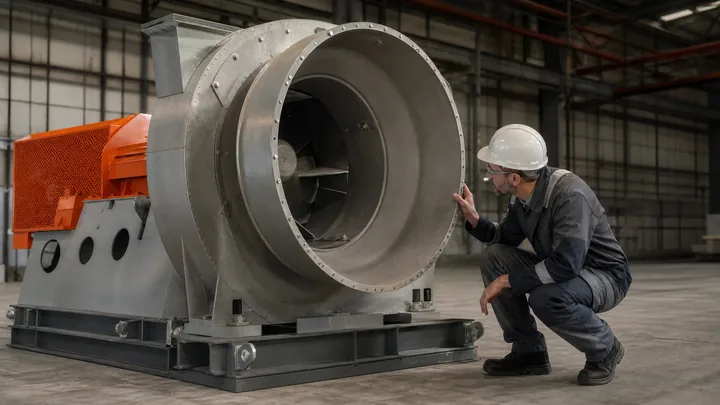
Industrial Fan Spark-Resistant Construction
Review spark-resistant fan construction by identifying the airstream hazard, ignition source, material compatibility, duty, classification and protection basis.
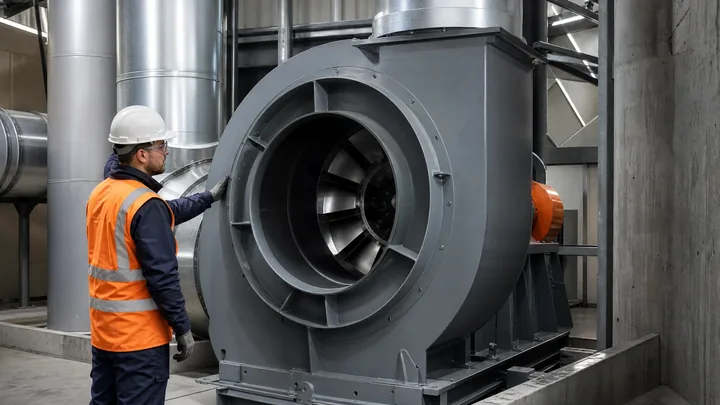
Industrial Fan Sound Power vs Sound Pressure
Use sound power for source comparison and sound pressure for a receiver location, keeping room, distance, reflections, system, and measurement conditions visible.
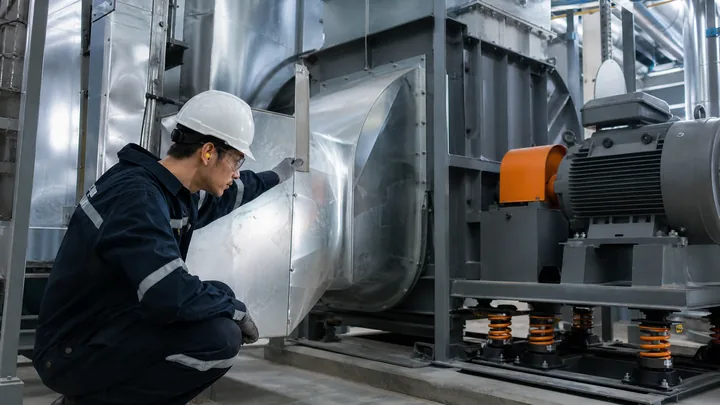
Industrial Fan Vibration Isolation Mount Selection
Select base-mounted fan vibration isolators using complete assembly mass, point loads, speed range, support stiffness, deflection, restraint and rigid-bypass checks.
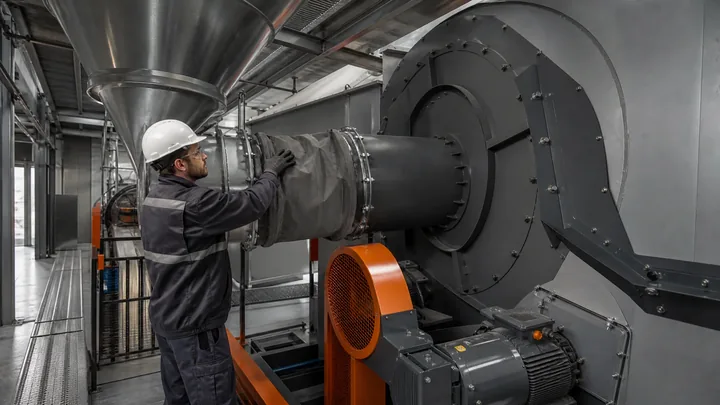
Industrial Fan Flexible Connector Selection
Select a flexible connector from fan movement, temperature, pressure, material compatibility, geometry and maintenance access—not nominal diameter alone.
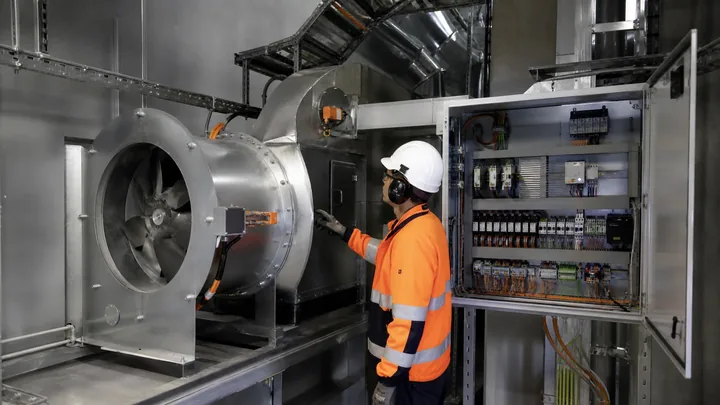
Industrial Fan Emergency Stop, Normal Stop and Lockable Isolation
Separate normal stop, emergency stop and lockable isolation in an industrial fan project, then review the controls against the drawing, hazard assessment and service boundary.
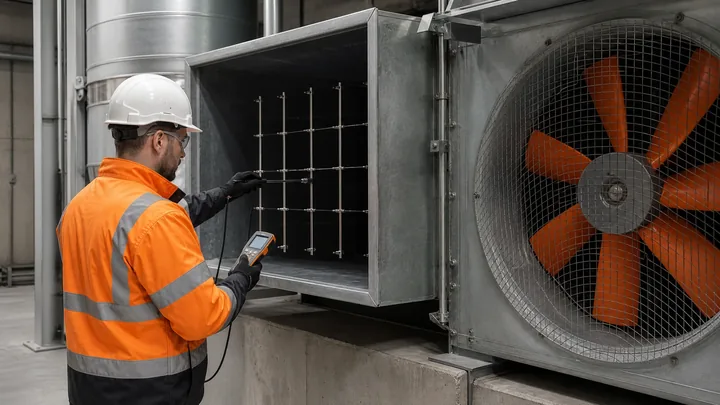
Industrial Fan Airflow Measurement Instruments
Choose an airflow instrument by the measurement boundary, velocity profile, access, temperature, dust, moisture and required uncertainty—not by the instrument name alone.
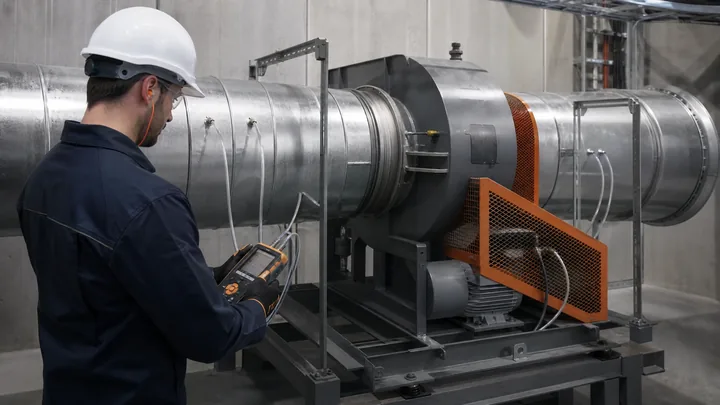
Industrial Fan Static Pressure Measurement
Measure fan static pressure with defined reference planes, suitable taps and instruments, airflow and operating state; separate fan pressure from duct readings.

Industrial Fan Damper Selection
Choose an industrial fan damper for backdraft prevention, isolation, balancing or modulation, then check pressure drop, leakage, actuator behavior and access.
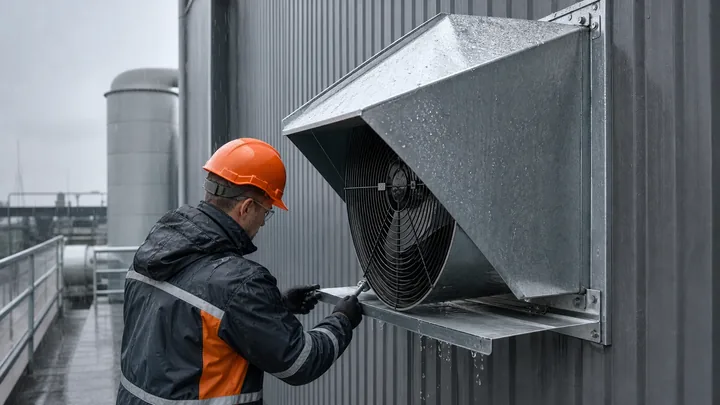
Industrial Exhaust Fan Weather Hood Selection
Select an exhaust-fan weather hood by checking rain, discharge direction, pressure loss, support, access and drainage; a hood is not just a cover.

Industrial Fan Safety Guard Requirements
Plan industrial fan guarding around every reachable moving part, secure attachment, service access and a verified safe-run interlock.
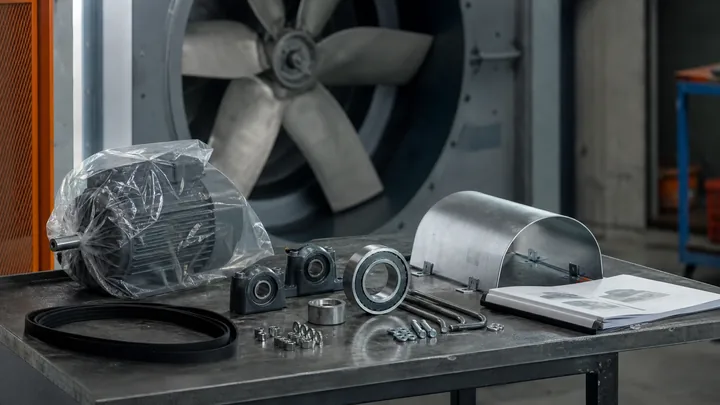
Industrial Fan Spare Parts Planning
Plan industrial fan spare parts by identifying the exact model and revision, wear items, lead-time risks, storage conditions, change history and safe replacement method.
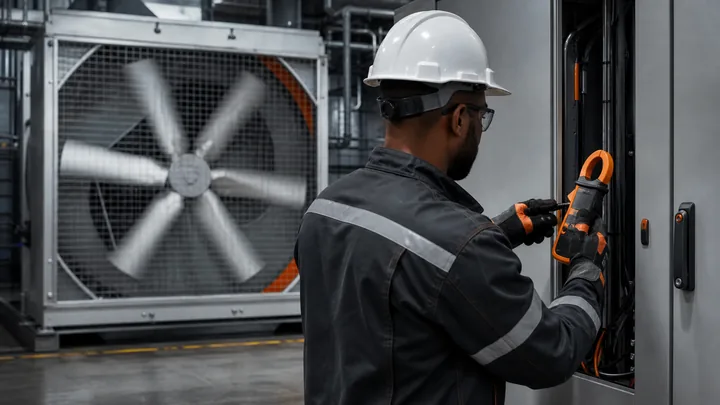
Industrial Fan Energy Monitoring
Measure industrial fan energy by logging electrical input, speed or control state, run hours and the useful airflow or pressure result under a defined system condition.

Industrial Exhaust Fan Opening Size
Measure a wall exhaust fan's rough opening, sleeve, wall thickness and support frame. Use a field sheet to separate nominal diameter from actual installation size.

Industrial Exhaust Fans For Hot Factories
Plan hot-factory exhaust by locating the heat source, protecting the equipment boundary, providing replacement air and verifying the occupied-zone result.
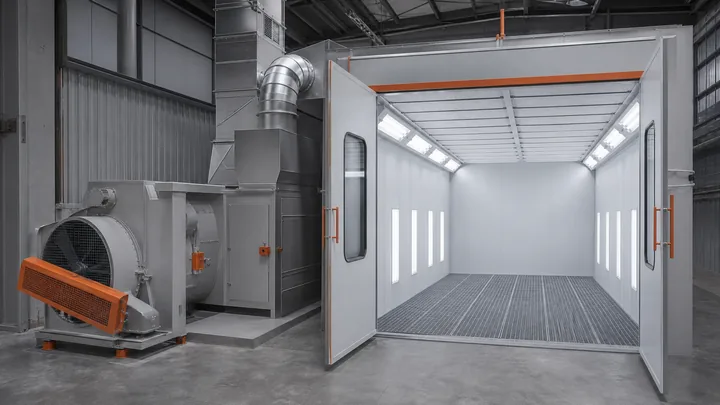
Industrial Fans For Paint Booths
Plan paint-booth exhaust around the booth classification, airflow direction, make-up air, filtration, motor boundary, discharge and cleaning practice.
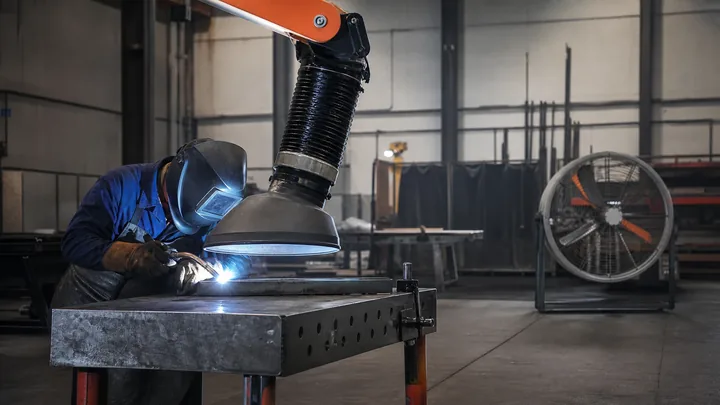
Industrial Fans For Welding Shops
Choose welding-shop airflow by separating source capture, general circulation, replacement air and fume discharge before selecting a fan.
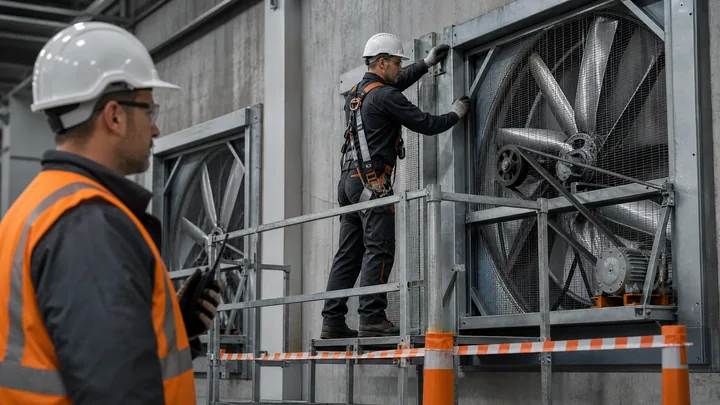
Industrial Fan Maintenance Checklist
Use an industrial fan maintenance checklist to isolate energy, inspect guards, fasteners, bearings, belts, vibration, controls and the air path before service.
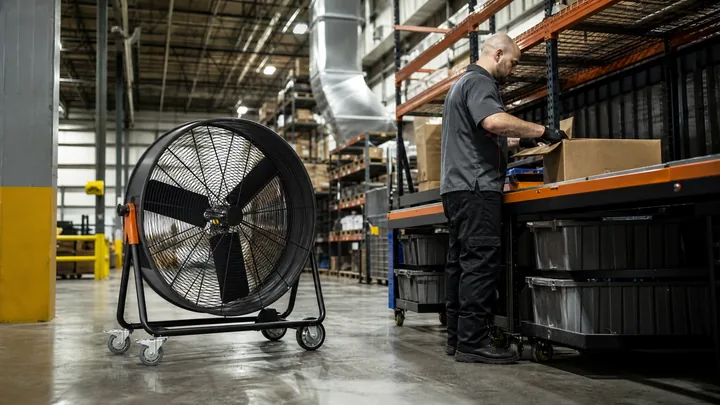
Industrial Fans For Warehouse Work Cells
Choose a mobile industrial fan for a warehouse work cell by separating local relief, circulation, extraction and traffic safety.

Outdoor Industrial Fan Selection
Select an outdoor industrial fan by checking rain, wind, corrosion, cable protection, discharge, support and safe service access.

HVLS Fans For Garages
Plan an HVLS fan for a vehicle garage by checking lift travel, doors, lights, vehicle height, roof structure and occupied-zone air movement.

HVLS Fans For Churches And Community Halls
Plan church and community-hall HVLS fans around seated comfort, ceiling obstacles, speech, structural support and service access. Includes a project brief checklist.

HVLS Fans For Shops
Choose an HVLS fan for a shop by checking clear height, work-cell obstructions, lights, doors, structure and occupied-zone air movement.
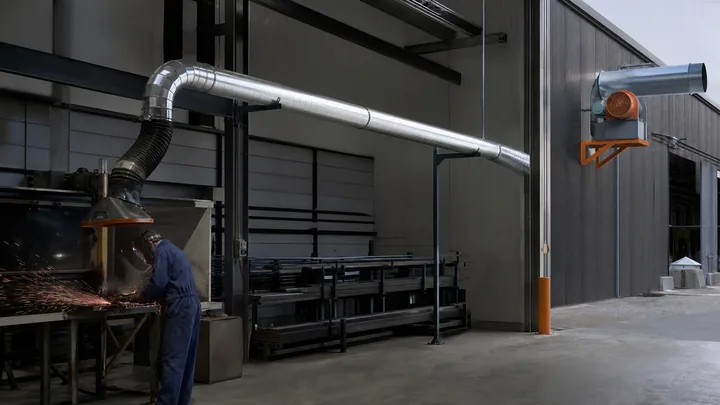
Factory Ventilation Duct Layout
Lay out factory exhaust ductwork by controlling approach flow, transitions, elbows, support, discharge and service access.
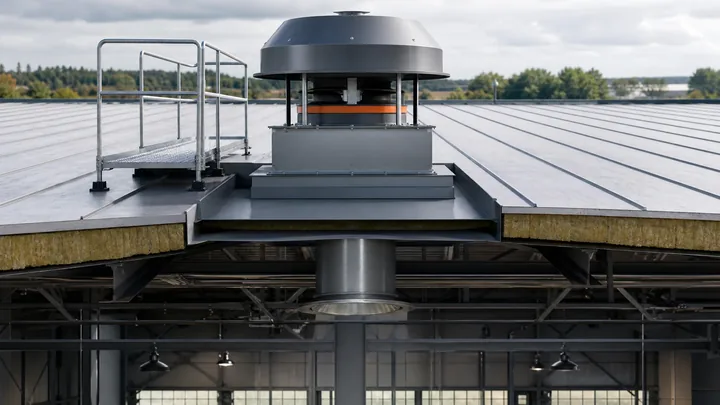
Factory Roof Ventilation Fans
Plan factory roof ventilation fans around the hot-air source, curb, flashing, discharge, structure and safe roof access.
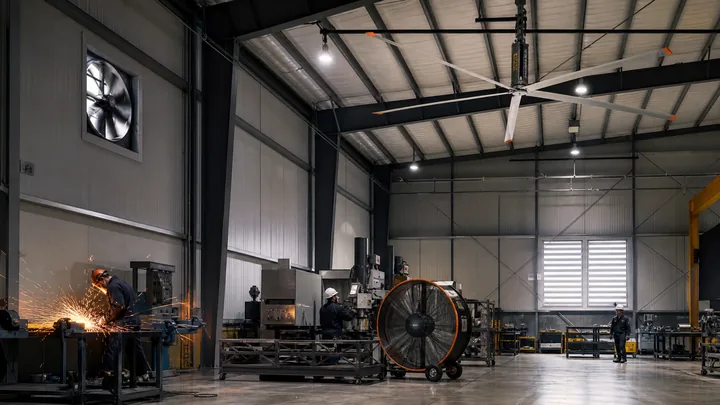
Factory Ventilation Fan Selection By Airflow Job
Choose between HVLS circulation, mobile spot airflow and exhaust by separating the factory's air movement jobs before selecting equipment.
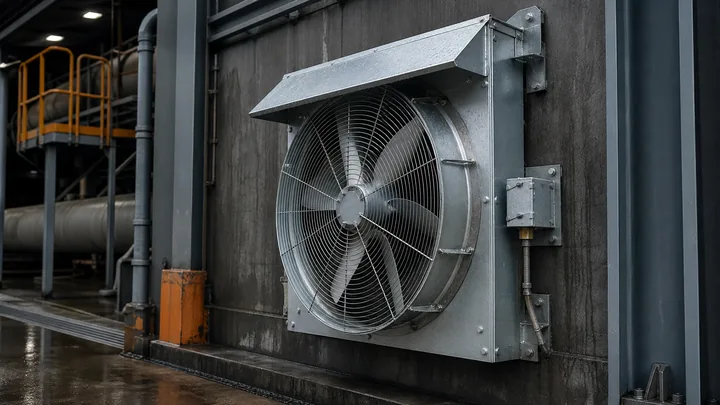
Heavy-Duty Industrial Exhaust Fan Selection
Select a heavy-duty industrial exhaust fan by checking air condition, pressure, structure, weather exposure, guarding and maintenance access.

Industrial Exhaust Fans For Warehouses
Plan warehouse exhaust fan placement around discharge, replacement air, rack geometry, door states and service access before comparing a model or quote.
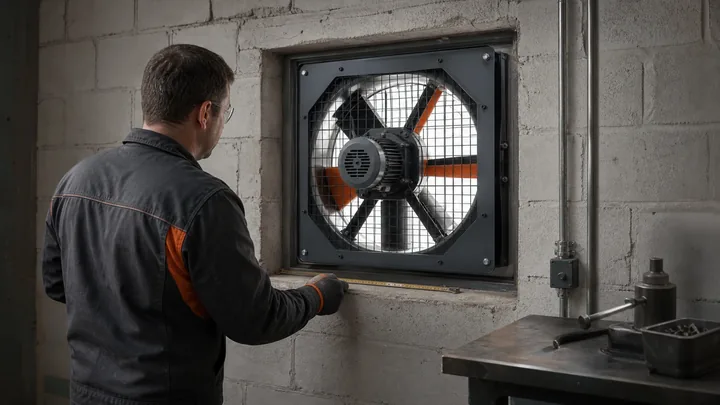
Industrial Exhaust Fan Sizes: Compare The Whole Installation
Compare industrial exhaust fan size classes by wall opening, airflow duty, service access and replacement-air path instead of choosing a diameter in isolation.

Industrial Fan Corrosion Selection
Select corrosion-resistant industrial fan construction by matching chemistry, concentration, temperature, moisture, cleaning method and exposure across wetted components.

Cleanroom Circulation Fans
Evaluate cleanroom circulation fans by airflow pattern, particle risk, cleanability, materials, noise, controls and the room qualification basis.

Warehouse Winter Air Mixing
Use warehouse winter air mixing to reduce temperature layering without creating drafts, undermining heating controls or pulling outdoor air through open doors.
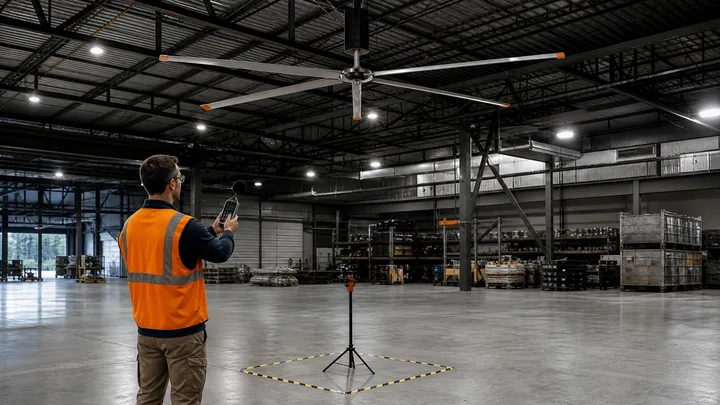
HVLS Fan Noise Comparison
Compare HVLS fan noise using the same acoustic quantity, useful air movement and test conditions. Includes a supplier data checklist and an installed-room check.

HVLS Fan Mounting Structure Requirements
Prepare an HVLS fan mounting review around primary structure, point loads, vibration, downrod geometry, electrical route, clearances and service access.
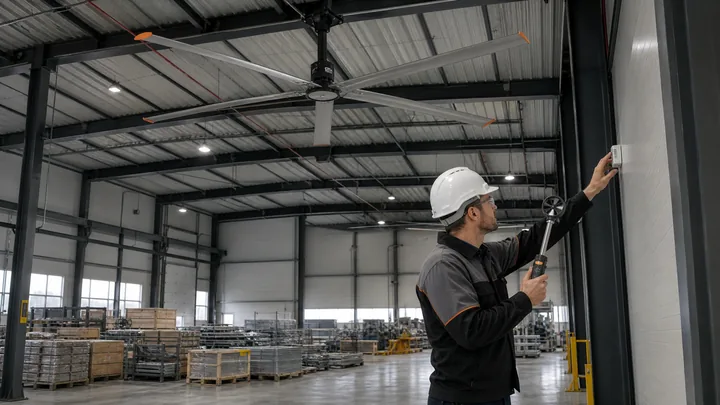
HVLS Fan Controls And Sensors
Plan HVLS controls around occupied-zone comfort, temperature or air-speed sensing, schedules, interlocks, seasonal modes and a manual override.
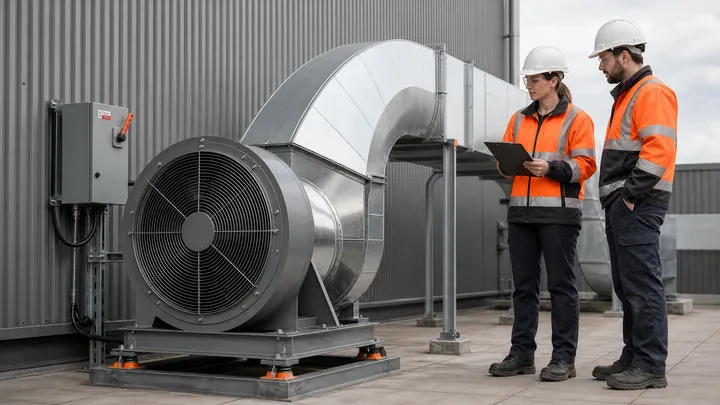
Industrial Fan Airflow Commissioning Report Checklist
Use an industrial fan airflow commissioning report checklist to record equipment identity, design duty, instruments, measurement points, operating conditions, readings, deviations and review boundaries before sign-off.

Industrial Fan Bearing Failure Signs
Identify early bearing warning signs in industrial fans while separating bearing symptoms from imbalance, alignment, lubrication and system problems.

Industrial Fan Belt-Drive Maintenance
Maintain a belt-driven industrial fan using exact belt identification, pulley alignment, OEM tension instructions, guard checks and measured restart records.
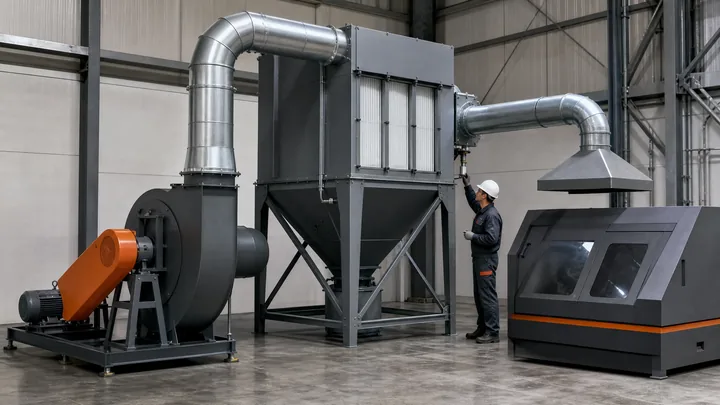
Dust Collection Exhaust Fan Sizing
Size a dust-collection exhaust fan from capture points, transport velocity, branch diversity, duct loss, filter loading and discharge conditions.

Industrial Fan Filter Pressure Drop
Include filter pressure drop in industrial fan selection and commissioning by recording clean, loaded, bypass and replacement conditions at the actual airflow.
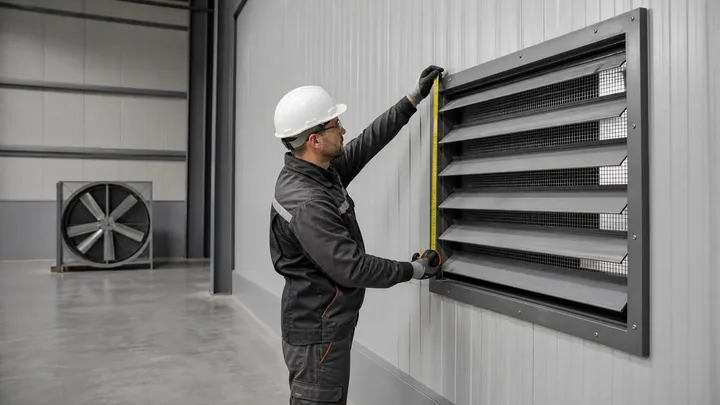
Make-Up Air Louver Sizing
Size a make-up-air louver from required replacement airflow, net free area, face velocity, weather exposure, screen loss and the building pressure objective.
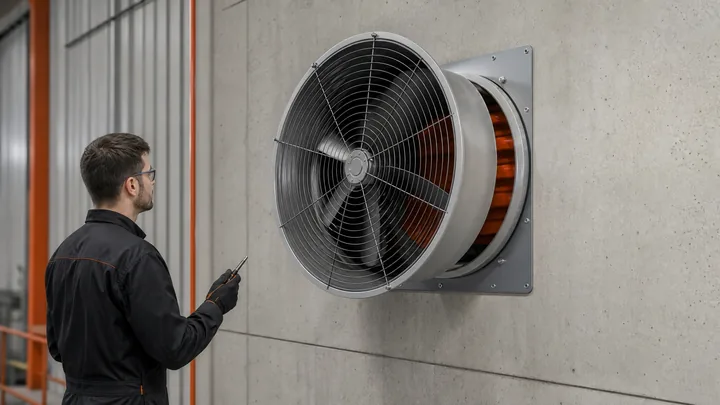
Backdraft Damper For Exhaust Fans
Specify a backdraft damper by airflow direction, pressure, weather exposure, leakage expectation, material, mounting and maintenance access.

Industrial Fan Inlet And Outlet Design
Reduce avoidable turbulence by coordinating fan inlet approach, outlet transition, discharge direction, flexible connections and access clearances.

Industrial Fan Duct Design
Plan industrial fan ductwork around airflow distribution, pressure loss, transitions, access, support, noise and discharge rather than drawing a fan as an isolated box.

Industrial Fan Replacement Motor: Check Nameplate And Shaft Compatibility
Screen an industrial fan replacement motor against the original nameplate, frame, mounting, shaft, rotation, controller, cooling and service conditions before calling it compatible.
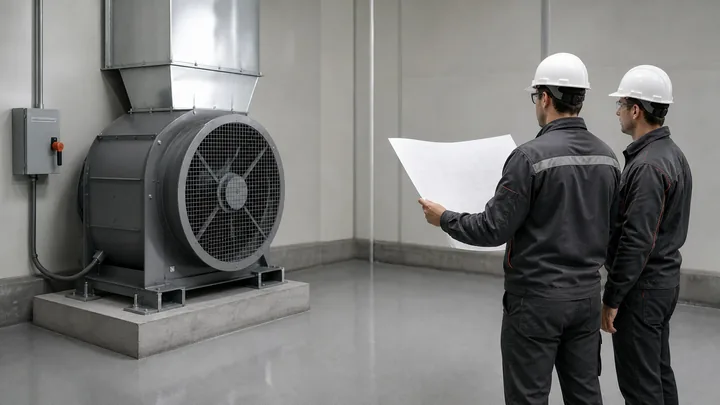
Explosion-Proof Industrial Exhaust Fan Selection
Select exhaust equipment for a classified location by documenting the hazard, zone or division, temperature class, gas or dust group and electrical scope.
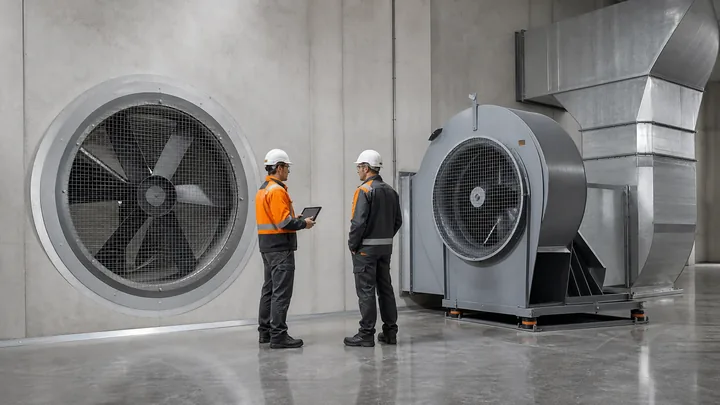
Axial Vs Centrifugal Exhaust Fans: The Air Path Decides
Compare axial and centrifugal exhaust fan selection by airflow, static pressure, duct geometry, contaminant path, space and service needs.

Industrial Exhaust Fan Balancing: Fix The Cause First
Understand when an exhaust fan needs cleaning, alignment, system correction or professional dynamic balancing, with a practical evidence-led workflow.
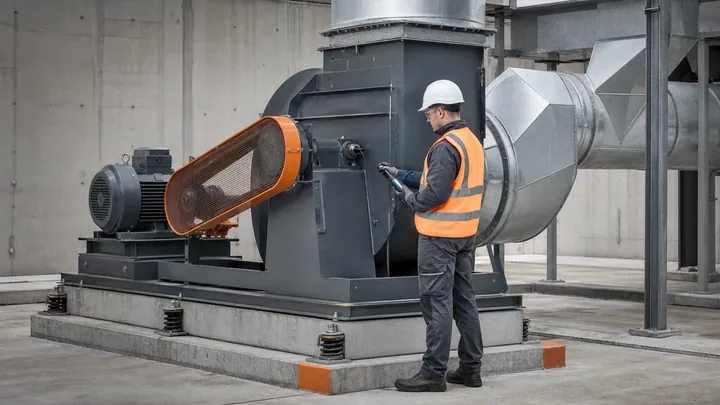
Industrial Fan Vibration Troubleshooting Without Guesswork
A field method for separating imbalance, looseness, misalignment, bearings, resonance and system changes when an industrial fan vibrates.

HVLS Fans In Aircraft Hangars: Treat Clearance As A Moving Boundary
Plan HVLS fans for an aircraft hangar by mapping aircraft envelopes, doors, cranes, lights, structure, fire protection, service paths and changing operational clearances.

HVLS Fans With Air Conditioning: Mix Air Without Pretending To Make Cooling
Coordinate HVLS fans with air conditioning by separating cooling capacity from air mixing, checking diffuser paths and verifying occupied-zone comfort.

Direct-Drive Vs Geared HVLS Fans: Choose For The Building
Compare direct-drive and geared HVLS fans by torque path, service points, controls, noise, spares and lifecycle evidence instead of choosing a universal winner.
VFD Control For Industrial Exhaust Fans: Control A Measured Need
Apply VFD control to industrial exhaust fans by defining the control variable, safe speed range, motor compatibility, minimum ventilation and field acceptance tests.

Industrial Fan Louver Free Area And Pressure Loss: Inputs To Collect
Collect the airflow, louver schedule, gross opening, net free area, pressure-loss curve, screens, shutters and wall-opening details needed for an industrial fan louver review.
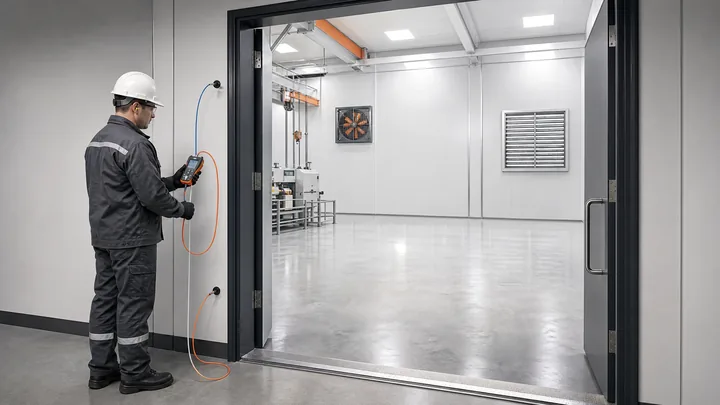
Factory Negative Pressure Without Starving The Exhaust System
Plan factory negative pressure by defining the containment boundary, exhaust flow, replacement-air path and measured room-to-room pressure relationship.

How To Measure Industrial Exhaust Fan Airflow In The Field
Measure industrial exhaust fan airflow with a documented duct traverse, valid test plane, calibrated instrument and recorded system state instead of one grille reading.

Fan System Effect: When Exhaust Layout Changes The Duty
Reduce fan system effect by giving an exhaust fan a uniform inlet, a usable outlet connection and enough straight, supported duct for the selected arrangement.

Industrial Fan Curves And Static Pressure, Read From The Duty Point
Read an industrial fan curve by defining airflow, pressure type, air density and the system operating point before comparing speed, power or efficiency.
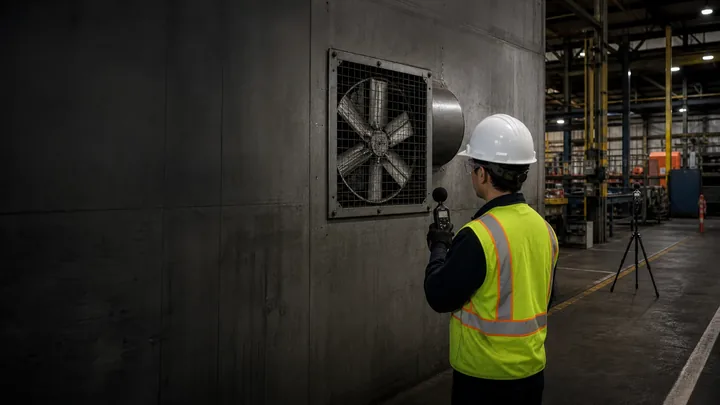
Industrial Exhaust Fan Noise Reduction Starts With The Source
Diagnose industrial exhaust fan noise by separating source, vibration, system effect and room conditions before changing speed, ductwork or silencers.
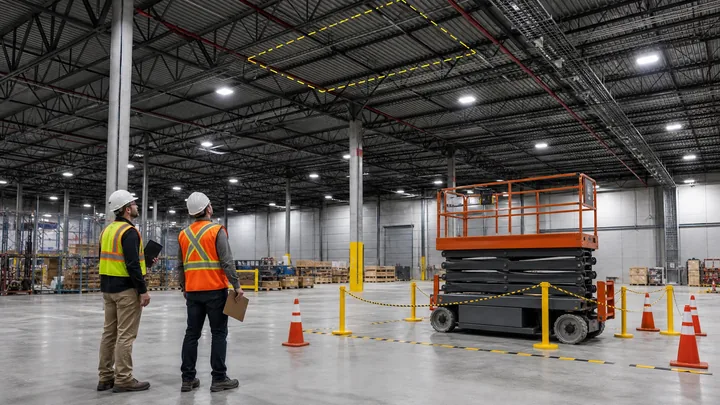
HVLS Fan Installation Cost Depends On The Scope
Understand HVLS installation cost drivers—structure, mount, lift, power, controls, fire coordination, commissioning, freight and access—without fake prices.
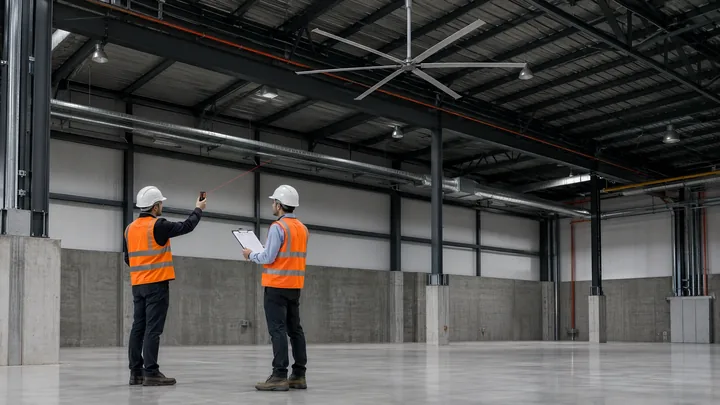
HVLS Fan Specification Checklist For Comparable Quotes
Write a comparable HVLS fan specification covering building inputs, useful-air result, fan construction, controls, installation, evidence, commissioning and exclusions.
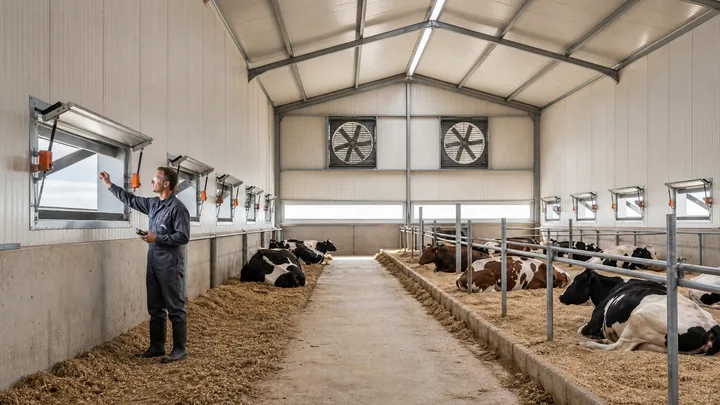
Livestock Barn Ventilation Starts With The Animals And Season
Plan livestock barn ventilation by species, animal number and weight, season, moisture, gases, inlets, distribution, controls and backup capacity—not floor area alone.
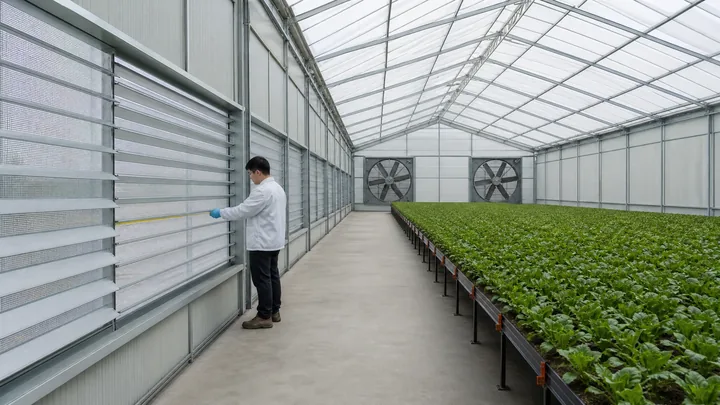
Greenhouse Exhaust Fan Sizing Needs More Than Floor Area
Size greenhouse exhaust from volume, climate, crop, solar load, inlet area and staged controls; do not use floor area or one universal ACH alone.

Warehouse Roof Exhaust Fans Need A Roof Plan First
Compare warehouse roof and wall exhaust by air path, weather, curb, roof structure, make-up air, service access and discharge; no dedicated roof model is confirmed.
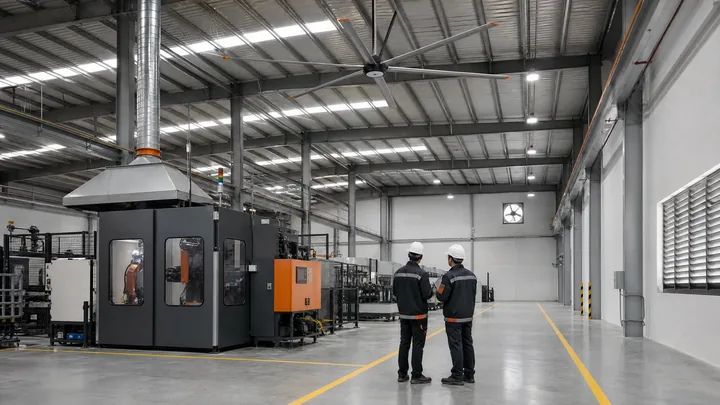
Factory Ventilation Planning Starts At The Source
Plan factory ventilation in order: capture contaminants at source, set general exhaust, provide make-up air, then add circulation without short-circuiting the air path.

Industrial Drum Fan Sizes: Compare What Actually Exists
Compare real AirMoveX industrial drum fan sizes—30 to 78 inches—by series, access, airflow duty, reach, noise, power and mobility.
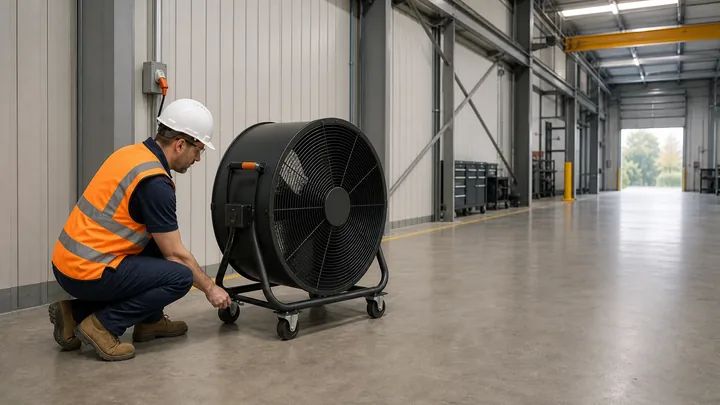
Choose A Portable Industrial Fan By The Job
Choose a portable industrial fan by task: circulation, spot cooling, clean-air supply or ducted exhaust, then compare airflow, throw, noise, power, guards and mobility.
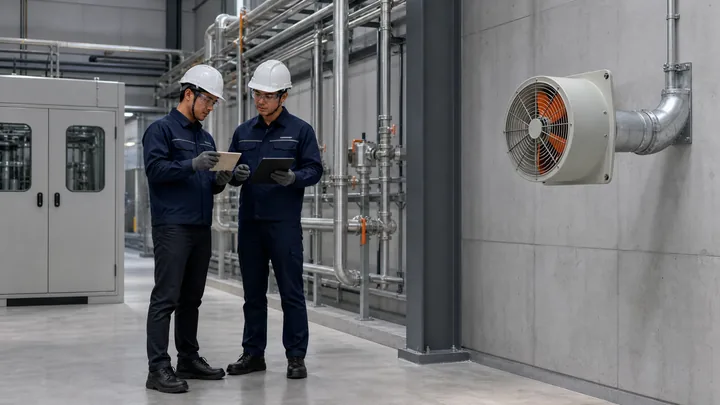
FRP Exhaust Fan Selection Starts With The Chemical
Select an FRP exhaust fan by chemical, concentration, temperature, resin system, hardware, motor location, cleaning exposure, airflow and static pressure.

Industrial Exhaust Fan Maintenance Checklist
Build an industrial exhaust fan maintenance checklist around lockout, guarding, contamination, belts, bearings, vibration, current and airflow verification.

HVLS Destratification Without A Cold Draft
Use an HVLS fan for winter destratification by measuring the ceiling-to-floor temperature difference, reducing speed and checking occupied-zone air movement.
No matching articles yet.
Try a broader term or clear the filters to browse all guides.